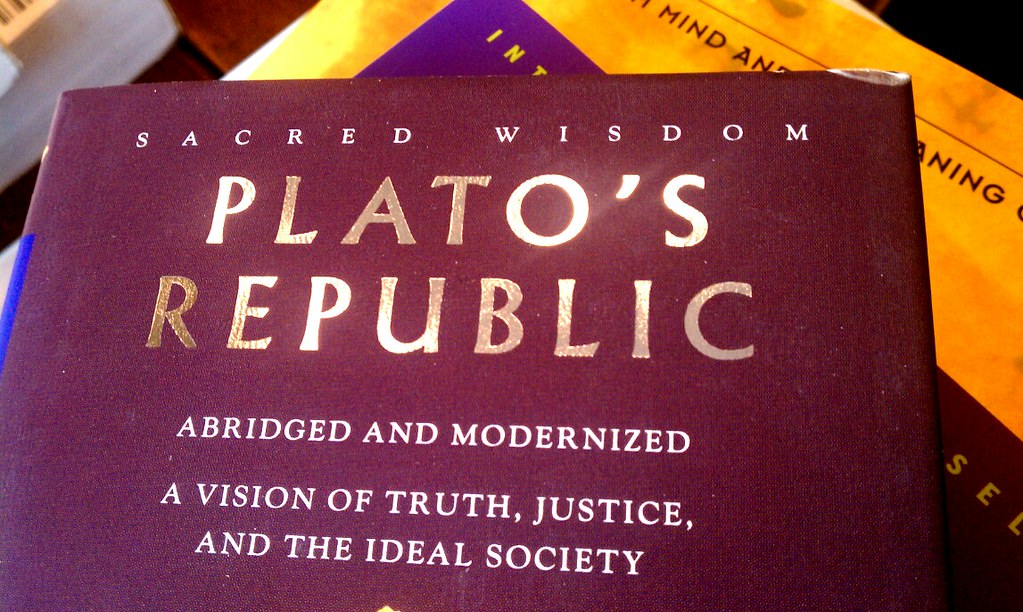
Plato’s Republic is one of the most influential works in Western philosophy. Written in the 4th century BCE, this text delves into profound questions about justice, morality, and the ideal society. The purpose of The Republic goes beyond storytelling; it aims to explore philosophical principles that remain relevant today. To understand Plato’s intent, we must examine the historical context, the themes he discussed, and the ultimate goals of this masterpiece.
The Historical Context: Athens in Crisis
Plato lived in Athens during a tumultuous period marked by war and political instability. The Peloponnesian War had left Athens weakened, with its democratic government struggling to maintain order. Corruption and societal decay were widespread, and citizens began questioning the effectiveness of democracy. Plato, deeply influenced by his teacher Socrates, sought to address these issues through his philosophical writings.
The Republic reflects Plato’s dissatisfaction with democracy, which he believed often led to poor governance. The trial and execution of Socrates, Plato’s mentor, further disillusioned him with Athenian politics. Through The Republic, Plato proposed an alternative vision of governance that prioritized wisdom and justice over populism and power struggles.
Exploring Justice: The Central Theme of The Republic
At its core, The Republic seeks to answer one pivotal question: What is justice? Plato examines this question through a series of dialogues led by Socrates. The conversations unfold between Socrates and various interlocutors, including Thrasymachus, Glaucon, and Adeimantus.
Thrasymachus argues that justice is merely the advantage of the stronger, implying it is a tool of oppression. Glaucon and Adeimantus challenge Socrates to prove that justice benefits the individual, even when no one is watching. Through these dialogues, Plato emphasizes that justice is not merely about external behavior but the harmony of the soul and the state.
Plato concludes that justice occurs when each part of society—and the individual—fulfills its proper role. His tripartite model of the soul (reason, spirit, and appetite) mirrors his ideal vision of a just society, where rulers, auxiliaries, and producers work in harmony.
The Allegory of the Cave: Enlightenment and Leadership
One of the most famous sections of The Republic is the Allegory of the Cave, a metaphor for enlightenment and education. Plato describes prisoners in a cave who mistake shadows on the wall for reality. When one prisoner escapes and sees the real world, he struggles to adjust but eventually gains true knowledge.
This allegory serves multiple purposes in The Republic. It underscores the importance of education in achieving a just society and highlights the philosopher’s role as a guide to truth. Plato believed that most people live in ignorance, but philosophers, through rigorous reasoning, could achieve enlightenment. This belief forms the basis of his argument for philosopher-kings as ideal rulers.
The Vision of the Ideal State: Kallipolis
Plato’s Republic outlines a blueprint for the ideal state, which he calls Kallipolis. This state is governed by philosopher-kings, individuals trained to rule through their wisdom and virtue. Plato argued that only those who understand the Forms—eternal truths—can govern justly.
Kallipolis is structured into three classes: rulers, auxiliaries, and producers. Each class corresponds to a part of the soul, ensuring societal harmony. Rulers (reason) make decisions, auxiliaries (spirit) protect the state, and producers (appetite) provide for material needs. Plato’s hierarchical model emphasizes specialization, where each individual contributes according to their abilities.
Plato’s Critique of Democracy and Tyranny
A significant portion of The Republic critiques existing forms of government, particularly democracy and tyranny. Plato viewed democracy as flawed because it allowed unqualified individuals to wield power. He argued that democratic societies often descend into chaos, eventually giving rise to tyranny.
Tyranny, in Plato’s view, represents the lowest form of government, driven by unchecked desires and corruption. The Republic contrasts these flawed systems with Kallipolis, advocating for a meritocratic governance model led by philosopher-kings.
The Purpose Behind The Republic: Education and Reform
Plato’s ultimate goal in writing The Republic was to educate and inspire reform. He sought to challenge his readers to reflect on their own societies and consider alternatives to flawed systems. The dialogues encourage critical thinking, pushing readers to question conventional wisdom and pursue deeper truths.
Plato also hoped to influence future leaders by providing a philosophical framework for governance. While Kallipolis may seem utopian, its principles serve as a guide for creating more just and harmonious societies.
Relevance of The Republic Today
Although written over 2,000 years ago, The Republic continues to resonate in contemporary discussions about justice, leadership, and governance. Its critique of democracy remains thought-provoking in modern political contexts, where questions about populism and the role of experts persist. For students and professionals seeking a deeper understanding of Plato’s ideas, Plato online learning courses provide accessible opportunities to explore his philosophy and its impact on modern thought.
The Allegory of the Cave remains a powerful metaphor for the challenges of education and enlightenment. Plato’s emphasis on justice as harmony offers valuable insights for addressing societal divisions and inequalities.
Conclusion
Plato wrote The Republic not just as a philosophical treatise but as a call to action. Through its exploration of justice, governance, and education, the text challenges readers to strive for a better society. While Kallipolis may be an unattainable ideal, its principles continue to inspire thinkers and leaders worldwide. Plato’s vision of a just society, led by wisdom and virtue, remains a timeless guide for navigating the complexities of human governance.
Apart from that if you want to know about Best books in New York then please visit our Education Category.