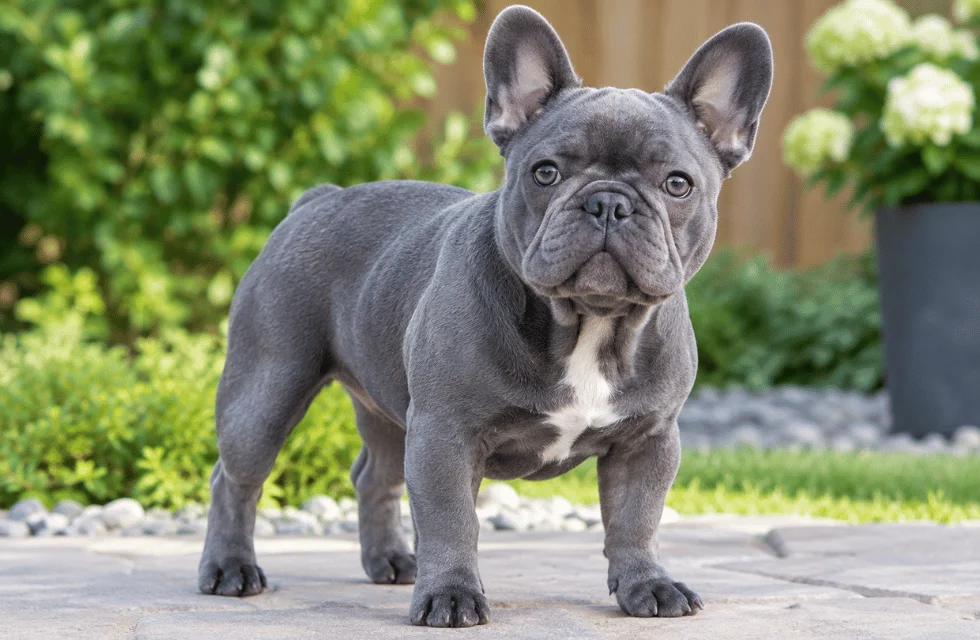
That slate-gray coat is striking, but color should never be the only buying factor. A blue French Bulldog gets its color from diluted black pigment, not from a separate breed. U.S. buyers should also consider breathing, skin, orthopedic, eye, and cardiac health. Responsible health testing matters more than a rare-color label.
A blue-coated Frenchie carries two recessive dilution copies that soften black pigment into gray-blue. The color is disqualifying under the U.S. conformation standard, although an off-color dog may still be registrable. Buyers should compare documented health testing, breathing function, structure, and temperament before weighing shades.
Key Facts
| Topic | What U.S. owners should know |
|---|---|
| Color cause | Recessive dilution variants can change black pigment into gray-blue. |
| U.S. breed-standard status | Blue and blue fawn are disqualifying colors. |
| Official weight limit | The AKC standard disqualifies dogs over 28 pounds. |
| Temperament | The standard describes the breed as affectionate, adaptable, alert, and playful. |
| Skin issue to know | Color dilution alopecia can affect dogs with dilute coats. |
| Advertised puppy pricing | Current seller guides commonly cite roughly $2,000–$5,000 or more. |
| Main buying priority | Verified health testing should outweigh a rare-color premium. |
Key Takeaways
- Blue describes a coat color, not a separate breed.
- The AKC conformation standard disqualifies blue, but registration is a separate issue.
- Color dilution alopecia is a skin concern associated with dilute coats.
- General breed health matters more than coat rarity.
- U.S. buyers should verify health results before paying a deposit.
What Makes a Blue French Bulldog Blue?
The blue look comes from dilution at the D locus, commonly described through recessive variants. These variants change black eumelanin to a softer gray or slate tone. Nose and skin pigment may also appear gray-blue rather than black. The gene changes coloration, not the dog’s basic breed identity.
Blue is different from merle, which produces irregular patches through another genetic mechanism. Blue fawn combines dilute pigment with a fawn base. Brown-related genetics plus dilution can produce paler shades called lilac or Isabella in some naming systems. These labels describe coat genetics rather than separate breeds.
Are Blue Frenchies Recognized by the AKC?
Under the FBDCA breed standard used by the AKC, blue and blue fawns are disqualifying colors. Blue or green eyes are also disqualifying in conformation. These dogs therefore cannot meet the standard’s color requirements in the show ring. That status does not automatically mean an individual dog is a mixed breed.
AKC has also explained that an off-color Frenchie can still be registered when registration requirements are satisfied. Registration and conformation eligibility are different questions. A registration certificate does not establish that a dog is healthy. Buyers still need independent health records and breeder transparency.
Health Issues U.S. Owners Should Understand
Color dilution alopecia, or CDA, deserves special attention with dilute coats. VCA describes CDA as an inherited condition associated with blue or fawn coloration. Affected dogs can develop thinning hair, scaling, itching, or secondary skin infections. Dilute coloration does not mean every individual will develop the condition.
The blue color does not erase the broader health concerns seen across the breed. FBDCA highlights breathing, spinal, allergy, and orthopedic problems among important concerns. Short-faced dogs may also struggle more during hot weather or strenuous exercise. Those risks should shape breeder selection and everyday care.
What Health Testing Should a Buyer Request?
Ask for verifiable results, not a screenshot with unclear names or dates. FBDCA’s 2026 health program recognizes several useful evaluations for breeding dogs. These include cardiac, patella, tracheal, eye, hip, respiratory, and spinal assessments. Public OFA records make health claims easier to verify.
Useful records to request include the following.
- Cardiac and patella evaluations
- Hip and elbow results
- A current eye examination
- Respiratory function grading or another BOAS assessment
- Spinal or vertebral information
- Relevant DNA results and family health history
A breeder should discuss the limitations of every test. No screening package can guarantee a problem-free puppy. Strong breeders also explain breathing quality, mobility, temperament, and family history. Avoid anyone who treats coat color as proof of quality.
U.S. Price Range and What You Are Paying For

Current U.S.-focused seller guides commonly advertise blue puppies around $2,000 to $5,000, sometimes higher. Special patterns or marketing labels can push advertised prices above that range. These figures are not an official national pricing standard. Location, pedigree, testing, breeder practices, and demand can change the total.
Paying more for color does not buy better breathing, joints, or skin. Ask what the quoted price includes before sending money. Useful inclusions may cover veterinary records, microchip details, vaccinations, contract terms, and a return policy. A health-focused breeder should welcome detailed questions about both costs and testing.
Temperament, Size, and Family Fit
Coat color should not create a different temperament. The breed standard describes Frenchies as adaptable, affectionate, alert, playful, and even-tempered. AKC guidance places adults within a standard that disqualifies weights above 28 pounds. Individual personality still depends on genetics, socialization, training, and environment.
These compact companion dogs can fit apartments when owners manage heat and activity carefully. They still need daily interaction, short walks, and mental play. For another small-dog comparison, see MagazineCamp’s What Is the Best Raw Food for Cats guide for U.S. families. Different breeds suit different schedules, grooming budgets, and activity levels.
Daily Care in U.S. Homes
Short faces make heat management especially important across much of the United States. AKC says Frenchies do best in moderate temperatures and tolerate heat less effectively. Schedule walks during cooler hours in hot regions. Stop activity when breathing becomes unusually noisy, labored, or slow to recover.
Keep facial folds clean and dry, and brush the short coat regularly. Check the skin for thinning hair, bumps, flakes, or persistent itching. Maintain a lean body condition because excess weight can add breathing stress. A veterinarian familiar with brachycephalic dogs can help set appropriate exercise limits.
Home setup matters too. Use air conditioning during dangerous heat and provide constant access to fresh water. Supervise around pools because front-heavy Frenchies can be poor swimmers.
How to Choose a Responsible Breeder
A responsible breeder should show health records before discussing rare-color premiums. Ask for registered names, testing dates, OFA links, and information about both parents. Request videos showing normal movement and comfortable breathing after light activity. Meet the puppy and dam when practical.
Review the contract before paying a deposit. Look for clear health terms, return provisions, and reliable breeder contact information. FBDCA’s referral requirements include OFA CHIC screening and a written sales contract. Listed breeders must also state their health guarantee and return policy.
Use this buyer checklist:
- Verify the breeder’s identity and physical location.
- Match health results to the registered names of both parents.
- Avoid sellers who use “rare” as their main proof of value.
- Ask about CDA, allergies, breathing, spine, and joint history.
- Confirm veterinary records, pickup terms, and transport plans.
- Keep an emergency or insurance budget for future care.
Keep your search broad enough to compare several breeders or rescue options. Pressure to send a same-day deposit is a reason to slow down. Browse MagazineCamp’s Pets section while building your companion-animal checklist. The goal is a healthy match rather than the fastest purchase.
Frequently Asked Questions
Is a Blue French Bulldog Rare?
Blue is less common than many standard colors because the dilute appearance requires recessive genetics. Demand can also make the color appear especially scarce in advertisements. Rarity varies between breeding populations and available litters. It should never outweigh credible health evidence.
Do Blue Frenchies Keep Blue Eyes?
Many puppies can begin life with lighter-looking eyes that change as they mature. Adult blue eyes are not required for the dilute coat color. The U.S. breed standard disqualifies blue or green eyes in conformation. Coat color and adult eye color should not be treated as the same trait.
Are Blue Frenchies Less Healthy?
Dilute coloration is associated with CDA, but color alone cannot predict an individual dog’s overall health. Breathing, spine, joints, allergies, and eyes also matter across the breed. Evaluate each dog together with its family health information. Do not judge likely health from coat color alone.
What Should a U.S. Buyer Check Before Paying a Deposit?
Verify the breeder’s identity, contract, parent health results, and puppy veterinary records. Ask how the breeder handles returns or significant health findings. Never rely on registration papers as a substitute for health testing. Consider arranging an independent veterinary examination soon after pickup.
Make Health the Deciding Factor
The coat can be beautiful, but it should remain one trait among many. Focus first on breathing, structure, skin, temperament, and documented family health. Budget for routine and unexpected veterinary care before bringing a puppy home. That approach protects both your household and the dog.
Before paying a deposit, compare records from more than one source and ask direct questions. Save copies of health results, contracts, and veterinary documents. Then choose the breeder or rescue that answers clearly without pressure. A careful purchase decision is more valuable than any color premium.