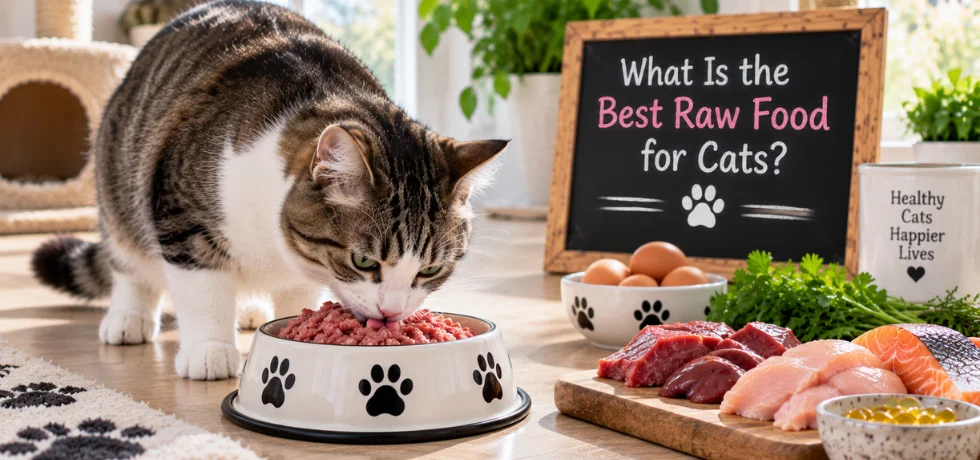
You may be asking, “What is the best raw food for cats?” Safety and nutritional adequacy should come first. A strong candidate is a commercial diet labeled complete and balanced for your cat’s life stage. In the United States, the CDC and FDA still warn that raw pet food can carry serious pathogens.
No raw product is risk-free, and raw diets have not been proven superior to balanced cooked diets. The CDC does not recommend raw pet food for dogs or cats. The FDA also says avoiding raw diets is the best way to reduce the risk of certain foodborne infections.
For most U.S. cat owners choosing raw, the best option is a commercial diet labeled complete and balanced. Look for a life-stage statement, documented pathogen controls, and transparent finished-product testing. Even then, CDC and FDA warn that raw foods can carry Salmonella, Listeria, and other hazards.
Raw Cat Food: Key Facts at a Glance
| Question | What U.S. cat owners should know |
|---|---|
| Best type to consider | Commercial, complete-and-balanced food with documented pathogen controls |
| Homemade or commercial? | Commercial formulas reduce nutritional guesswork, although raw-food risks remain. |
| Freeze-dried or frozen? | Neither format is automatically sterile or pathogen-free. |
| Main nutrition check | Look for the AAFCO nutritional adequacy statement. |
| Main safety concerns | Salmonella, Listeria, other pathogens, and emerging H5N1 concerns |
| Current U.S. issue | FDA has investigated H5N1 associated with certain raw poultry pet food lots. |
Key Takeaways
| Takeaway | Why it matters |
|---|---|
| Complete nutrition comes first. | Meat alone does not provide every nutrient cats need. |
| The processing method matters. | Freeze-drying alone does not eliminate every pathogen. |
| Finished-product testing matters. | It gives buyers more information about manufacturer safety controls. |
| Household health matters. | Raw feeding can expose people as well as pets to foodborne germs. |
What Is the Best Raw Food for Cats? Our 2026 Picks
Our comparison uses four practical criteria: nutritional adequacy, safety controls, testing transparency, and ease of feeding. We did not conduct hands-on feeding trials. The ranking reflects current U.S. label information and manufacturer documentation, not a veterinary endorsement.
The FDA does not recommend individual pet food brands, and neither does the CDC. The selections below are editorial comparisons based on current published information. Owners should confirm that any chosen recipe matches their cat’s age and health needs. Magazine Camp’s pet care and nutrition coverage follows the same safety-first approach to feeding decisions.
| Rank | Product | Why it stands out | Safety and nutrition notes | Trade-offs |
|---|---|---|---|---|
| 1 | Stella & Chewy’s Chick Chick Chicken | Clear safety documentation and complete nutrition | The company states its raw foods meet AAFCO profiles. It uses HPP and third-party pathogen testing. | Freeze-dried raw still requires careful handling. |
| 2 | Instinct Fresh-Dried Raw Meals Chicken | Convenient shelf-stable format with 93% meat and organs | Instinct says its complete raw meals follow AAFCO profiles. Raw ingredients are cold-pressured before freeze-drying. | Check the exact life-stage statement before buying. |
| 3 | Open Farm Harvest Chicken Freeze-Dried Raw | Strong ingredient traceability and an all-life-stages formula | The recipe is formulated to meet AAFCO nutrient profiles for all life stages. | Ask about current finished-product pathogen testing. |
| 4 | Primal Chicken & Salmon Freeze-Dried Nuggets | Complete formula designed for easy rehydration | Primal states this recipe meets AAFCO levels for all life stages. Its current safety program includes pathogen controls and test-and-hold procedures. | Requires extra preparation if you prefer serving it rehydrated |
Under these criteria, Stella & Chewy’s Chick Chick Chicken is our first pick for many U.S. buyers. The brand documents complete nutrition, HPP treatment, and third-party batch testing. That documentation does not erase raw-food risks, so a veterinarian should still guide the final choice.
The 2026 H5N1 Issue Changes the Raw-Food Conversation
A current FDA notice makes H5N1 important when discussing uncooked poultry diets in 2026. FDA reported H5N1 in RAWR Chicken, eating lots of CCS 25 077 and CCS 25 093. The agency linked the same viral cluster to a cat that became ill and was euthanized.
Lot CCS 25 077 carries a September 18, 2026, sell-by date. Lot CCS 25 093 carries an October 3, 2026 date. The notice does not mean every raw product contains H5N1.
FDA had already required covered manufacturers using uncooked poultry or cattle ingredients to consider H5N1 in safety plans. A 2026 CDC report also documented severe feline H5N1 cases linked with raw products. These developments make current lot checks and manufacturer safety controls especially relevant for U.S. buyers.
Before buying uncooked poultry products, review the FDA’s current H5N1 information and check the product lot. Do not assume freezing or freeze-drying destroys the virus or every bacterial hazard. FDA identifies cooking and other effective processing steps as important ways to inactivate H5N1.
“Complete and Balanced” Matters More Than a Raw Label
Raw meat alone is not a complete feline diet. Cats require specific nutrients, including taurine and preformed vitamin A. AAFCO says the nutritional adequacy statement is the key label section for matching food to species and life stage.
Look for wording stating that the food is complete and balanced for the appropriate life stage. A topper labeled for intermittent or supplemental feeding should not replace a complete diet. Review AAFCO’s pet-food label guidance before comparing bags.
Homemade raw mixtures deserve extra caution because nutrient balance is difficult to calculate correctly. PetMD advises involving a veterinarian or board-certified veterinary nutritionist when considering these diets. Nutritional deficiencies can cause serious problems even when the ingredient list appears wholesome.
Is Freeze-Dried Raw Safer Than Frozen Raw?
Freeze-dried food is easier to store than frozen food, but convenience does not equal sterility. The CDC says freezing, dehydrating, and freeze-drying reduce germs without reliably killing all of them. PetMD also warns that pathogens can survive freeze-drying.
Processing controls therefore deserve more attention than the word “freeze-dried” on the package. Ask whether a company uses pressure processing, another validated control, and finished-product testing. CDC specifically suggests asking whether finished products are tested for Salmonella, E. coli, and Listeria.
Some manufacturers publicly describe extra controls beyond freeze-drying. Stella & Chewy’s describes HPP and third-party testing, while Primal describes pressure-based controls and test-and-hold procedures. These are manufacturer statements, so they should not be confused with a government safety guarantee.
Who Should Be Especially Careful With Raw Feeding?
CDC identifies several households where foodborne germs can cause more serious illness. Higher-risk people include young children, older adults, pregnant people, and people with weakened immune systems. Young pets and animals with weakened immunity can also face greater risks.
If your household fits those categories, discuss alternatives with your veterinarian before introducing uncooked animal products. Complete cooked wet food can still provide high-quality feline nutrition without the risks of raw-food handling. CDC notes that raw food is not automatically healthier than cooked food.
Cats with ongoing medical conditions also need individual nutrition advice. Dietary needs can change with kidney disease, diabetes, digestive disorders, allergies, or prescribed medications. A veterinarian can help determine whether a proposed diet fits those needs.
How to Choose and Feed a Commercial Raw Diet
Start with the nutritional adequacy statement, not marketing language on the front panel. Confirm the correct species and life stage, then review feeding directions. AAFCO recommends selecting food for the animal’s species, life stage, and condition.
Avoid generic rules claiming every cat should eat the same percentage of body weight. Calorie density can differ sharply between frozen, freeze-dried, and other diets. Follow the manufacturer’s measured feeding chart, then adjust portions with your veterinarian based on body condition.
Handle uncooked pet food as carefully as raw meat intended for people. Wash your hands, sanitize contact surfaces, and keep cold products refrigerated or frozen as directed. Discard leftovers according to the manufacturer’s instructions and current food-safety guidance.
Change diets gradually unless your veterinary team recommends a different approach. Watch appetite, stool quality, vomiting, weight, and drinking behavior during the change. Contact your veterinarian if your cat develops persistent digestive problems or stops eating.
The Next Step Before Changing Your Cat’s Food
Bring the exact product label to your veterinarian before making raw food your cat’s main diet. Ask about nutritional adequacy, calories, food-safety controls, and your household’s infection risks. Check FDA notices again when buying raw poultry because safety information can change quickly.
For more reading, explore Magazine Camp’s broader Health coverage. Pet owners may also enjoy the site’s pet photography guide. Those pages cover broader wellness and life with companion animals. Raw feeding deserves more scrutiny than ingredient marketing alone.
Complete nutrition, verified safety controls, and current FDA information provide a stronger basis for comparison. Your veterinarian is best positioned to connect those factors to your individual cat.
Frequently Asked Questions
Can cats eat raw chicken?
Cats can eat raw chicken, but that doesn’t make it a low-risk choice. Uncooked poultry can carry bacteria, and the FDA has documented H5N1 concerns involving raw poultry pet products. Grocery-store chicken also does not provide a complete feline diet on its own.
Is freeze-dried raw food safe for cats?
Freeze-drying does not reliably eliminate every harmful microorganism. A safer approach is to choose complete nutrition with documented pathogen controls and finished-product testing. High-risk cats or households should discuss cooked alternatives with a veterinarian.
Can I feed a raw diet every day?
A daily diet should be complete and balanced for your cat’s life stage. Treats and toppers marked for supplemental feeding cannot provide complete nutrition on their own. Raw feeding also requires consistent food-safety practices every day.
How much raw food should I feed my cat?
Use the feeding directions for the exact recipe because calorie density differs between products. Monitor weight and body condition rather than relying on a universal raw-food percentage. Your veterinarian can adjust the portion for age, activity, weight goals, and medical needs.
What is the best raw food for cats?
Our criteria-based first pick is Stella & Chewy’s Chick Chick Chicken among the options reviewed here. It combines complete nutrition with clearly documented HPP and third-party pathogen testing. That ranking does not mean raw feeding is appropriate for every cat or household.