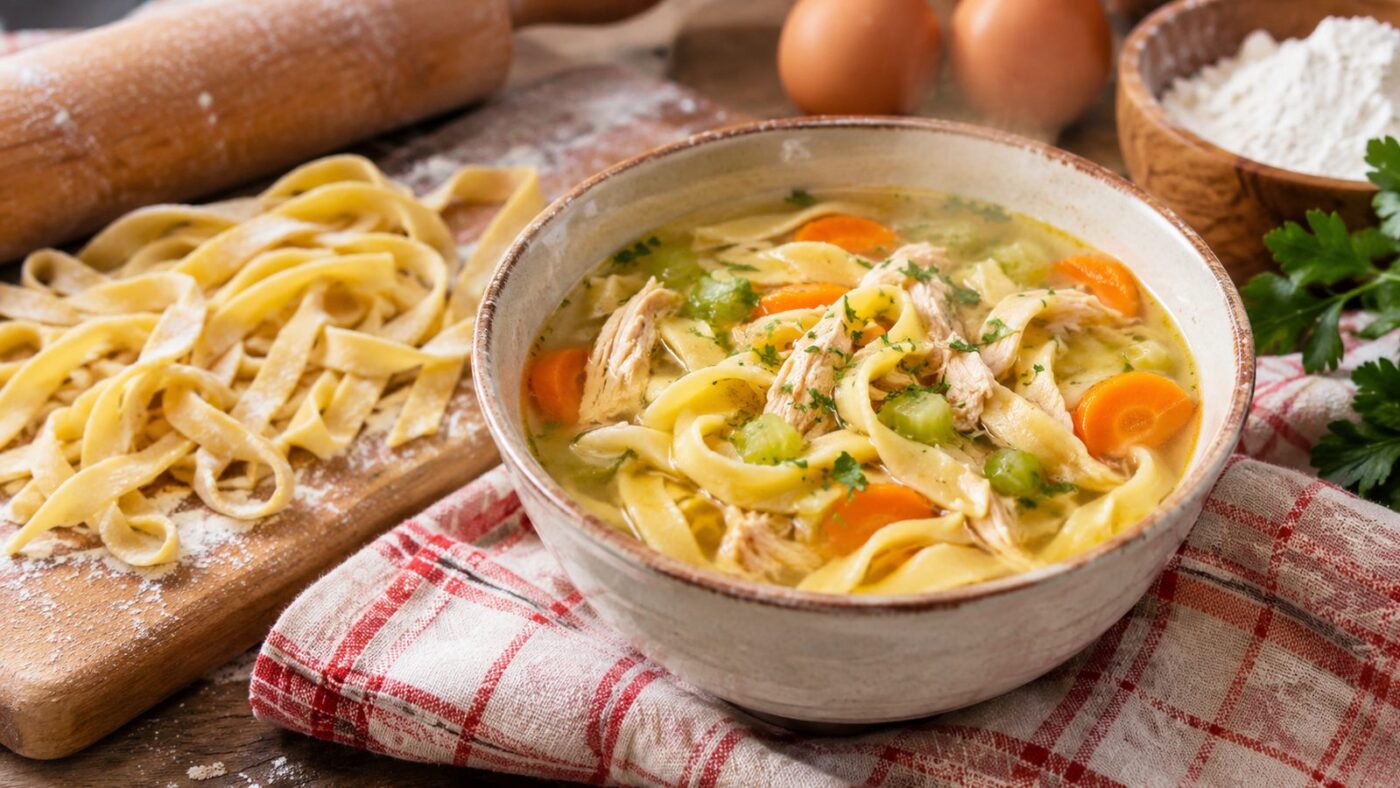
Homemade noodles turn a simple pot of chicken soup into old-fashioned comfort food. This version uses flour, eggs, salt, and a small splash of milk or water. You can roll the dough by hand or use a pasta machine. Quick answer: Mix about 2 cups flour with 3 large eggs, salt, and enough liquid to form firm dough. Knead until smooth, then rest it for 20 to 30 minutes. Roll it thin, cut into strips, and cook fresh strands in boiling broth for several minutes.
Homemade Egg Noodles at a Glance
| Detail | What to Know |
|---|---|
| Main ingredients | About 2 cups all-purpose flour, 3 large eggs, salt, milk or water |
| Dough texture | Firm, smooth, and slightly tacky |
| Resting time | 20 to 30 minutes |
| Rolling thickness | Roughly 1/16 inch for classic soup strips |
| Cutting width | About 1/8 to 1/2 inch |
| Fresh cooking time | Usually about 3 to 6 minutes in boiling broth |
| Dried cooking time | Usually about 8 to 12 minutes, depending on thickness |
| Refrigerator storage | 1 to 2 days |
| Freezer storage | Up to a few months |
| Good uses | Chicken soup, beef and noodles, or buttered strands |
What You’ll Need
Classic American egg noodle dough requires only a few familiar ingredients. The exact liquid amount changes with egg size, flour, and kitchen humidity. Start with less liquid because you can always add another teaspoon.
- About 2 cups all-purpose flour, plus more for dusting
- 3 large eggs
- 1/2 teaspoon salt
- 1 to 3 tablespoons milk or water, as needed
- Mixing bowl
- Fork or wooden spoon
- Rolling pin or pasta machine
- Sharp knife, pizza cutter, or pasta cutter
- Clean kitchen towel or baking sheet
All-purpose flour gives the finished pasta enough structure without making it unusually firm. Eggs provide richness, color, and much of the moisture. Milk can make the dough slightly richer, while water keeps the ingredient list simple. For more practical kitchen organization, Magazine Camp also covers pantry shelf ideas for keeping flour and other staples easier to reach.
How to Make Homemade Noodles Step by Step
1. Mix the Dough
Place the flour and salt in a large mixing bowl. Make a well in the center, then add the eggs. Beat the eggs lightly with a fork before pulling flour inward. Mix until shaggy pieces begin forming throughout the bowl. Add milk or water one teaspoon at a time if dry flour remains. Stop adding liquid once the mixture presses into a firm ball.
2. Knead Until Smooth
Turn the dough onto a lightly floured counter. Knead it for about 5 to 8 minutes until the surface becomes smoother. Press forward with your palm, fold the dough, and rotate it between pushes. The dough should feel firm rather than soft like bread dough. A little resistance is normal because egg pasta contains limited liquid. Avoid adding large amounts of flour during kneading.
3. Rest for 20 to 30 Minutes
Cover the dough with plastic wrap or an overturned bowl. Leave it at room temperature for 20 to 30 minutes. This rest relaxes the gluten formed during mixing and kneading. Rested dough rolls more easily and springs back less aggressively. It also becomes easier to stretch into a thin, even sheet. Keep the surface covered so the exterior does not dry.
4. Divide and Roll Thin
Cut the rested dough into two or four pieces. Keep unused portions covered while you roll the first piece. Smaller portions are easier to control on a standard kitchen counter. Roll from the center outward and rotate the dough frequently. Dust with small amounts of flour whenever the surface begins sticking. Aim for an even sheet rather than perfectly straight edges.
5. Cut the Strips
Lightly flour the finished sheet before cutting. You can cut it flat or loosely fold it into layers first. Use a sharp knife or pizza cutter for clean edges. Cut narrow strips for lighter soups and wider strips for hearty dishes. Separate the pieces immediately so their cut edges cannot stick together. Toss them with a small amount of flour if necessary.
6. Cook or Dry
You can cook the fresh pasta immediately after cutting. Bring chicken broth to a steady boil before adding small handfuls. Stir gently after each addition to keep the pieces separated. Fresh strips generally become tender within about 3 to 6 minutes. Thicker pieces may need a little more time. Taste one before serving because thickness affects cooking more than the clock does.
Rolling by Hand vs. Using a Pasta Machine
Both methods produce good results, so use the equipment you already own. Hand rolling creates a rustic shape that suits American chicken soup particularly well. A machine makes thickness more uniform and reduces the physical work.
| Method | Main Advantage | What to Watch |
|---|---|---|
| Rolling pin | No special equipment required | Thickness can vary |
| Pasta machine | Fast, even sheets | Dough must fit through rollers |
| Hand cutting | Rustic widths and easy cleanup | Strips may be irregular |
| Machine cutting | Uniform pieces | Cutter width limits your choices |
With a pasta machine, begin on the widest roller setting. Pass the dough through, fold it if needed, then reduce the setting gradually. Stop when the sheet reaches the thickness you want.
Thickness Guide for Soup and Other Dishes
Thickness affects tenderness, cooking time, and how much broth each strip absorbs. Thin pieces cook faster and feel lighter in soup. Thick pieces hold up well beside meat and gravy.
| Thickness | Best Use | Expected Texture |
|---|---|---|
| About 1/32 inch | Light soups | Delicate and tender |
| About 1/16 inch | Chicken noodle soup | Classic and balanced |
| About 1/8 inch | Beef and gravy dishes | Thick and chewy |
A good target for chicken soup is roughly 1/16 inch. You should almost see light through the rolled sheet. Remember that the pasta swells slightly as it cooks.
Should You Dry Them Before Cooking?
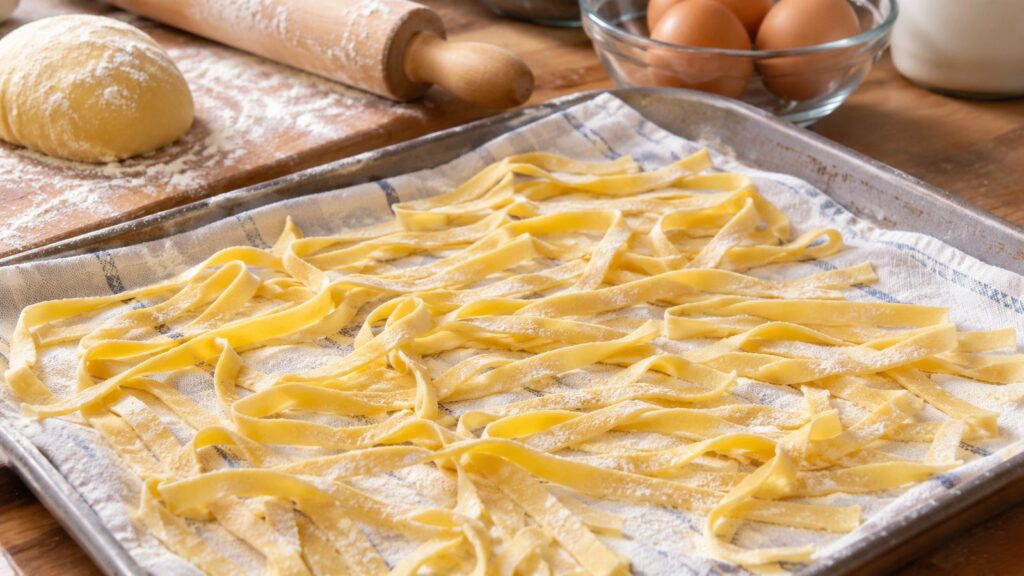
Drying is optional when you plan to cook the batch immediately. Freshly cut strips can go straight into boiling chicken broth. Give them a light flour coating if they must sit briefly. For partial drying, spread the pieces in a single loose layer. Leave them uncovered until the surface feels dry rather than tacky. Turn or toss them occasionally so the sides dry more evenly. Fully dried pieces need longer cooking than fresh ones. A range of about 8 to 12 minutes works for many medium-width strips. Check them often because width and drying time can change the result.
Troubleshooting Sticky or Tough Dough
Dough Feels Too Sticky
Sticky dough usually contains more moisture than the flour can comfortably absorb. Dust your hands and work surface with a small amount of flour. Knead again before deciding whether more is necessary. Avoid dumping a large scoop of flour onto the dough at once. That can move the mixture from sticky to tough quickly. Small additions give you much more control.
Dough Feels Dry or Tough
A dry, cracking mixture usually needs a little more moisture. Wet your fingertips or add milk or water by the teaspoon. Knead each addition completely before adding another. Dough that feels tight after kneading may also need rest rather than more liquid. Cover it and give it the full 20 to 30 minutes. The texture often becomes more cooperative afterward.
Dough Keeps Springing Back
Elastic dough contracts when gluten remains tense. Cover the piece and leave it alone for another 10 minutes. Resume rolling once it feels softer under the pin. Do not fight the dough by pressing harder and harder. Extra force can make rolling frustrating without solving the problem. Rest is usually the simpler fix.
Egg-Free Variation
You can make an egg-free version with flour, salt, and water. Start with about 2 cups flour and gradually mix in roughly 3/4 cup warm water. Add the water slowly because different flour brands absorb moisture differently. Knead the mixture until smooth, then give it a 30-minute covered rest. Roll and cut it using the same method as the egg version. Expect a paler color and a simpler wheat flavor. Egg-free dough may have less richness and slightly more chew. It still works well in vegetable or chicken-style broth. Check tenderness while cooking because the timing can differ from egg dough.
How to Store the Finished Pasta
For short storage, dust fresh pieces lightly with flour and refrigerate them in a covered container. Use them within about 1 to 2 days. Separate the layers with parchment if you are stacking them. Freezing works better when you want to keep a batch longer. Arrange portions on a baking sheet until firm, then transfer them to freezer containers. They can keep for up to a few months when tightly wrapped. Cook frozen portions without thawing them first. Add them directly to boiling broth and allow extra cooking time. Stir gently at the beginning so frozen pieces separate cleanly.
Best Ways to Serve Them
Chicken Noodle Soup
These rustic strips are especially good in classic chicken soup. Add them after the vegetables are nearly tender so they do not overcook. Keep the broth gently boiling until the pasta becomes tender. Remember that flour on the surface can slightly thicken the soup. Shake off excess flour if you prefer a clearer broth. Leave a little attached when you want a heartier consistency.
Beef and Noodles
Cut the dough slightly wider for beef and gravy dishes. Wider pieces stand up well to shredded pot roast and thickened cooking liquid. They also make the meal feel substantial without complicated ingredients. For a classic plate, spoon the beef mixture over mashed potatoes. Magazine Camp’s holiday potato recipes offer several potato preparations that can inspire side dishes. Keep the noodle portion simple when the beef sauce is already rich.
Buttered Noodles
Drain cooked strips and toss them with butter while hot. Add salt, black pepper, parsley, or chives according to your taste. A small spoonful of grated Parmesan also works if you want extra savory flavor. This simple preparation is useful beside roast chicken or vegetables. It also gives you a way to use leftover dough without making soup. Keep the seasoning modest so the egg-rich flavor remains noticeable. Readers looking for more everyday food inspiration can also browse William Harris’s Magazine Camp articles. His archive includes cooking and meal-related content alongside other Daily Bites features. It offers another starting point for planning simple meals.
Frequently Asked Questions
How long do homemade noodles cook in chicken broth?
Fresh strips usually need about 3 to 6 minutes in steadily boiling broth. Dried strips commonly need about 8 to 12 minutes. Always taste one because width and thickness affect the final cooking time.
Do I have to dry egg pasta before adding it to soup?
No, you can cook freshly cut strips immediately. Drying is mainly useful for storage or when you prefer a firmer texture. Shake away excess surface flour before adding them to clear broth.
Why are my egg noodles tough?
The dough may contain too much flour or may have been rolled too thick. Insufficient resting can also make the mixture harder to roll thinly. Add moisture carefully and allow enough resting time before rolling.
Can I make the dough ahead of time?
Yes, you can prepare and cut it before serving. Refrigerate fresh pieces for 1 to 2 days or freeze portions for longer storage. Keep them well covered so the surface does not dry excessively.
Make a Batch for Your Next Pot of Soup
Once you understand the texture, homemade noodles become a straightforward kitchen project. The key points are firm dough, patient kneading, a full rest, and thin rolling. Cooking directly in broth also keeps cleanup simple. Start with the classic egg version before adjusting thickness or liquid to your preference. After one or two batches, cutting the dough becomes much quicker. Make extra and freeze a portion for an easy future soup night. —