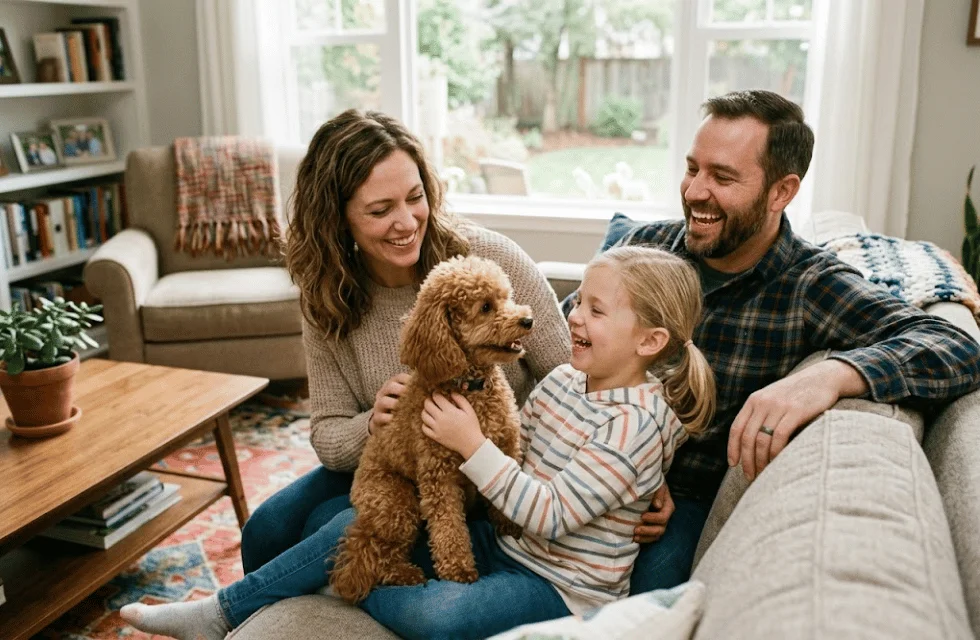
A mini poodle can be an excellent companion for people who want a small, intelligent, active dog that sheds little. The recognized breed variety is called the Miniature Poodle, and its compact size makes it practical for apartments, houses, singles, and many families. The trade-off is a coat that needs regular brushing and clipping, plus a bright mind that needs daily activity.
Quick answer: The Miniature Poodle is a small, athletic companion that typically stands over 10 and up to 15 inches at the shoulder. It is known for intelligence, trainability, low shedding, and substantial grooming needs. Adults also need regular exercise and mental stimulation to stay settled and engaged.
| Quick fact | What to know |
|---|---|
| Official variety | Miniature Poodle |
| AKC height | Over 10 inches and up to 15 inches |
| Typical adult weight | About 10–15 pounds |
| Typical lifespan | Roughly 10–18 years |
| Coat | Curly, continuously growing, low shedding |
| Temperament | Intelligent, active, affectionate, trainable |
| Exercise | Commonly about 30–60 minutes daily, adjusted for the dog |
| Grooming | Frequent brushing plus regular clipping |
| Home size | Can suit apartments or houses with enough daily activity |
| Allergy considerations | Lower shedding may help some people, but no dog is truly allergen-free |
The height range comes from the American Kennel Club standard, while common weight and lifespan ranges come from veterinary and breed references. Individual dogs can fall outside typical averages, so body condition and veterinary advice matter more than hitting a specific number.
Key Takeaways
- This is the middle size between the Toy and Standard varieties.
- The breed combines a small frame with notable energy and athletic ability.
- Its curly coat sheds little but requires consistent maintenance.
- Training is often rewarding because these dogs learn quickly and enjoy interaction.
- Health-tested parents are an important consideration when buying a puppy.
- Apartment living can work well when you provide exercise, training, and companionship.
What Is a Mini Poodle?
The informal name refers to the Miniature variety rather than a separate breed created by mixing dogs. Under the U.S. standard, a Miniature Poodle stands over 10 inches and no more than 15 inches at the highest point of the shoulders. Toy dogs are 10 inches or under, while the Standard variety is over 15 inches.
That distinction matters when you compare puppies advertised online. Terms such as “teacup,” “micro,” or “mini toy” do not create additional AKC-recognized size varieties. Buyers should pay more attention to documented parentage, adult size, health screening, and responsible breeding practices than to marketing labels.
The breed’s history also explains why these dogs need more activity than their polished appearance may suggest. Their larger ancestors worked as water retrievers, and the smaller varieties retained much of that intelligence, athleticism, and enthusiasm for learning. Modern dogs commonly enjoy retrieving games, swimming, obedience work, agility, and long walks.
Size, Build, and Appearance
Most adults weigh around 10 to 15 pounds, although the U.S. breed standard separates the varieties by height rather than weight. A healthy dog should have a balanced, athletic build instead of appearing fragile or heavy for its frame. Smaller varieties commonly reach full growth around the first birthday, though individual development varies.
The coat is dense and curly and comes in colors such as black, white, apricot, red, brown, cream, gray, and silver. Owners can keep it in elaborate show trims, but family pets are often clipped into shorter, easier-to-maintain styles. A shorter haircut reduces daily work, but it doesn’t eliminate the need for brushing and scheduled trims.
Temperament and Family Life
This breed tends to be alert, people-focused, playful, and quick to learn. Many dogs enjoy being involved in daily household routines rather than spending long stretches without interaction. Early socialization helps puppies become comfortable with visitors, other animals, unfamiliar environments, handling, and grooming.
Children and these small dogs can make a good combination when adults teach respectful handling. Their compact size is convenient, but children should still avoid rough play, grabbing, or carrying a dog without supervision. Introductions to cats and other dogs should also be gradual because individual temperament matters as much as breed tendencies.
Barking is another trait potential owners should consider. Alert dogs may quickly announce visitors, hallway noises, or activity outside a window, especially when they are bored. Exercise, enrichment, calm training, and rewarding quiet behavior can prevent normal alertness from becoming a persistent household problem.
Exercise and Training Needs
A small body does not mean small exercise needs. Veterinary breed guidance suggests roughly 30 to 60 minutes of daily activity for many healthy adults, adjusted for age, fitness, weather, and medical needs. Walks work well, but games and training sessions can provide valuable mental exercise too.
For many U.S. homes, a mini poodle fits best when you spread activity throughout the day. A morning walk, several minutes of reward-based training, and an evening game may be more useful than relying on one long outing. Food puzzles, scent games, fetch, obedience exercises, and safe swimming can also give an intelligent dog something constructive to do. Magazine Camp collects more routine-building ideas for dogs and other companion animals in its pets section.
Training should focus on clear cues and rewards rather than harsh corrections. These dogs often learn patterns quickly, including household habits owners never intended to teach. Consistency around barking, jumping, leash manners, grooming, and alone time can make everyday life easier from puppyhood onward.
Grooming: Low Shedding Does Not Mean Low Maintenance
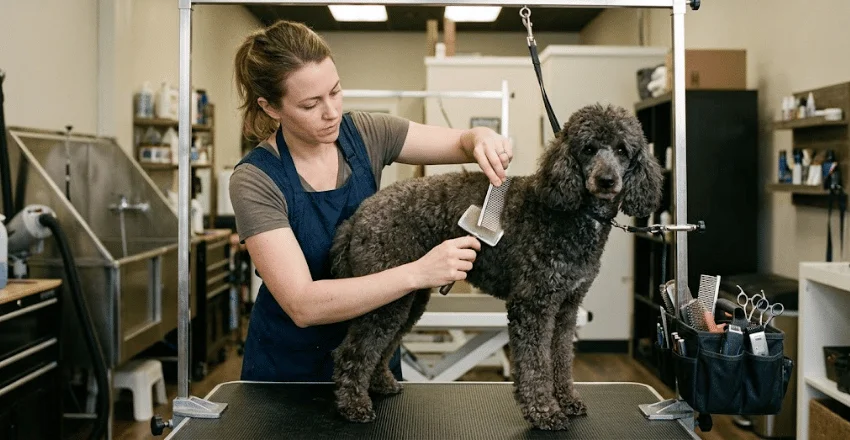
The curly coat is one of the breed’s biggest attractions because it sheds much less than many common dog coats. Loose hair can get trapped in the curls, so neglected coats can tangle and form painful mats. Regular brushing must reach through the coat, not just skim the surface.
Professional grooming is commonly scheduled about every four to six weeks, although coat length and lifestyle affect the interval. Owners who learn safe clipping techniques may do some or all maintenance at home. Starting handling, brushing, nail care, and grooming exposure during puppyhood can make the process less stressful later.
Low shedding also should not be confused with being completely hypoallergenic. People can react to proteins found in a dog’s dander, saliva, and urine, not only shed hair. Anyone with significant allergies should spend time around the breed before bringing a dog home and discuss serious concerns with an appropriate medical professional.
Health and Lifespan
A lifespan around 10 to 18 years is commonly reported, making this a potentially long-term commitment. Genetics, preventive veterinary care, body condition, dental health, exercise, nutrition, and chance can all affect an individual dog’s longevity. Regular wellness visits also help owners discuss age-specific concerns before problems become advanced.
Prospective puppy buyers should ask for more than a verbal statement that the parents are healthy. The Poodle Club of America recommends PRCD-PRA DNA testing, annual specialist eye examinations, patellar evaluation, and hip evaluation for breeding dogs in the Miniature variety. Buyers can ask for both parents’ registered names and verify available screening records rather than relying on screenshots alone.
Hip problems, kneecap issues, and inherited eye disease are among the health concerns discussed for this size. Health screening cannot guarantee that a puppy will never become ill, but it gives breeders better information for making breeding decisions. Veterinary care should always be individualized because symptoms, diagnosis, and treatment cannot be determined from breed averages alone.
Miniature vs. Toy: Which Size Fits Better?
The two varieties share many basic breed traits, so size is the clearest formal distinction. A Toy stands 10 inches or under, while a Miniature stands over 10 and no more than 15 inches under the AKC standard. The larger option can feel sturdier for active households, while the smaller one may appeal to owners who prioritize portability.
| Factor | Miniature | Toy |
|---|---|---|
| AKC height | Over 10 to 15 inches | 10 inches or under |
| Typical weight | Around 10–15 pounds | Around 4–6 pounds |
| Coat care | High | High |
| Trainability | High | High |
| Activity | Active and athletic | Active on a smaller physical scale |
| Best practical advantage | Small but comparatively sturdy | Maximum portability |
Don’t choose a size solely because it looks easier. Both need training, companionship, coat maintenance, preventive care, and appropriate exercise. Household activity, children, handling habits, travel plans, and preferred dog size are more useful decision points than appearance alone.
Choosing a Puppy or Adopting an Adult
Responsible sourcing starts with questions about health and temperament, not color or haircut. A breeder should be willing to discuss the parents, screening results, puppy socialization, contracts, veterinary care, and what happens if an owner can no longer keep the dog. Avoid feeling pressured to send money immediately because a seller claims another buyer is waiting.
Adoption is another option for people who are flexible about age, color, or pedigree. Shelters and breed-focused rescue groups may have adults whose size and personality are already easier to assess. Adoption fees and breeder prices vary by location, age, veterinary care, pedigree, and other factors, so the cheapest initial option is not always the least expensive over a dog’s lifetime.
For broader household and everyday-living reading, Magazine Camp readers can also browse the Lifestyle section while planning for a new companion. Preparation should include grooming expenses, routine veterinary care, food, training, identification, emergency savings, and safe transportation. Thinking about those recurring responsibilities before choosing a puppy can prevent expensive surprises later.
Is This Breed Right for You?
This small companion may suit you if you want an interactive dog that enjoys training, activity, and close involvement with its people. It can work in an apartment because daily exercise and enrichment matter more than having a large yard. People seeking a dog that needs little grooming or mental engagement should consider whether another breed would better match their routine.
The best fit also depends on how much time you can consistently give the dog, not how much time you have during the first few weeks. Coat care, veterinary needs, training, and companionship continue throughout adulthood. Reviewing practical daily-living information before you commit can also help frame pet ownership as an ongoing household commitment rather than a short puppy phase.
If the size, energy level, grooming schedule, and long-term costs fit your household, your next step is to meet healthy adult dogs and speak with responsible breeders or rescue organizations. Ask to see health documentation and observe temperament instead of choosing only by color or photographs. You can also return to the Magazine Camp homepage for newly published guides and lifestyle coverage.
Frequently Asked Questions
Is a mini poodle a good family dog?
Yes, the breed can work well for many families because it is small, trainable, active, and often strongly attached to its people. Children still need supervision and should learn how to handle a small dog gently. Daily exercise, early socialization, and consistent training greatly affect how smoothly the dog fits into family life.
How big does the Miniature variety get?
Under the U.S. AKC standard, adults stand over 10 inches and no more than 15 inches at the shoulder. Typical weight is around 10 to 15 pounds, although height is the formal measurement used to distinguish the variety. Body condition and individual genetics can make healthy adult weights differ.
Do these dogs shed?
They shed much less than many breeds because loose hair tends to remain caught within the curly coat. That characteristic does not make the coat maintenance-free, since trapped hair and curls can mat without brushing and clipping. No dog is completely free of allergens, so low shedding should not be treated as a guarantee for people with allergies.
How often should they be groomed?
Many owners use professional grooming approximately every four to six weeks, depending on the haircut and coat length. Home brushing is needed between appointments to prevent tangles, and longer coats demand more frequent attention. Nails, teeth, ears, and skin should also be included in the dog’s routine care.
How much exercise does an adult need?
Many healthy adults can use around 30 to 60 minutes of physical activity each day, but age and health can change that target. Mental activity is equally useful for a highly trainable breed, so short training sessions and puzzle games can complement walks. Puppies and dogs with medical conditions need an exercise plan appropriate for their stage of life.
How much does a puppy cost in the United States?
Prices vary substantially by breeder, location, pedigree, health testing, and demand. Chewy’s veterinary-reviewed breed guide cites a broad range of about $500 to $3,000, but real U.S. prices can fall outside that estimate, and adoption is often less expensive upfront. Buyers should evaluate health screening and breeder practices before choosing based on price alone.