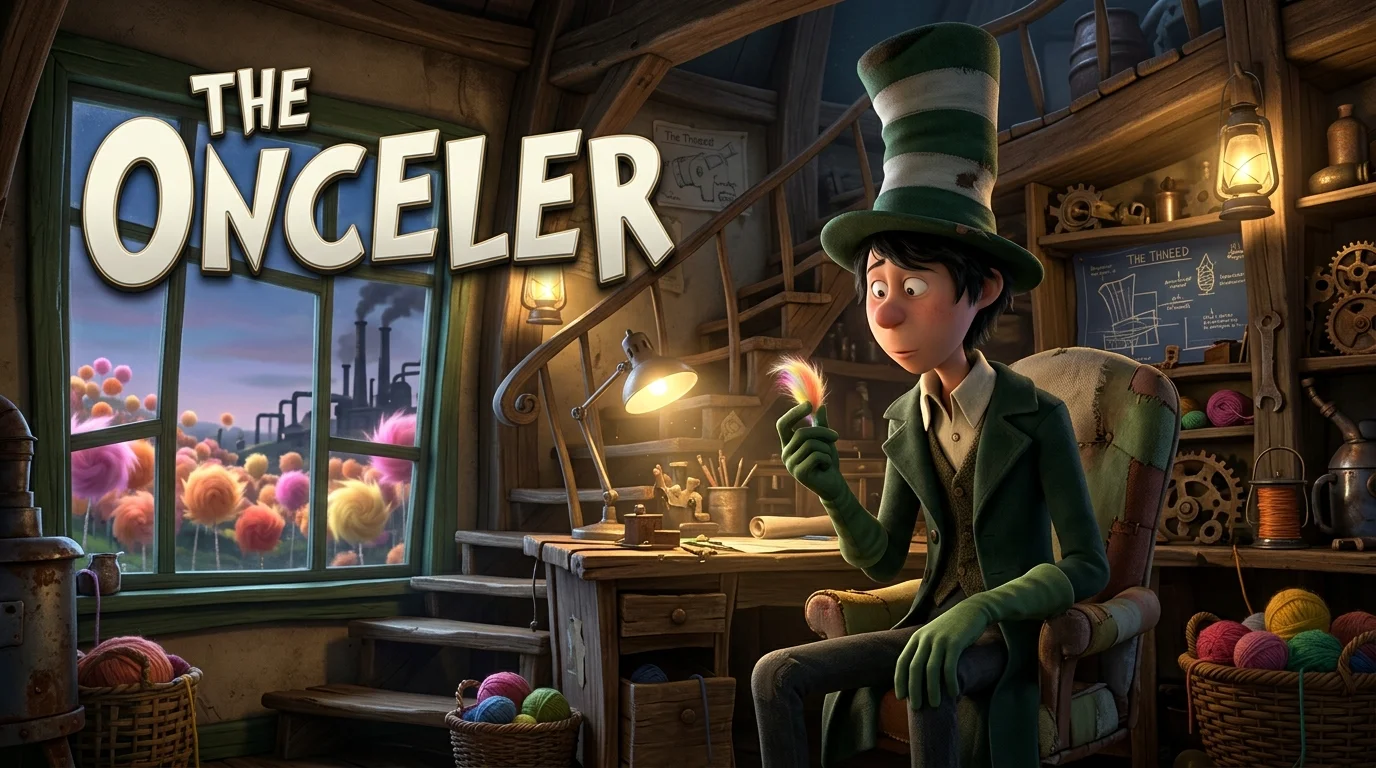
Quick answer: The Onceler is the common search spelling for Dr. Seuss’s Once-ler, the businessman in The Lorax. He cuts Truffula Trees to make Thneeds, expands production despite warnings, destroys the forest, and later regrets the damage. The 2012 movie also inspired a major Tumblr fandom around the character.
| Key fact | Details |
|---|---|
| Official character name | The Once-ler |
| First appearance | The Lorax by Dr. Seuss |
| Book publication | August 12, 1971 |
| Main product | Thneeds |
| Resource used | Truffula Tree tufts |
| 2012 movie voice actor | Ed Helms |
| Main story theme | Greed, overconsumption, environmental damage, and responsibility |
| Internet significance | Early icon of Tumblr fandom culture |
Who Is The Onceler in The Lorax?
The official spelling of the character’s name is Once-ler, with a hyphen. He appears in Dr. Seuss’s environmental story The Lorax. The book was first published in the United States in 1971.
The Once-ler begins as an inventor searching for material for his new product. He discovers a colorful forest filled with Truffula Trees. Their soft tufts provide the material he needs for his invention.
He calls that invention a Thneed and begins selling it. Demand grows, so his small operation becomes an industrial business. His success soon depends on cutting more trees than the forest can replace.
The Lorax repeatedly warns him about the consequences. Those warnings concern the trees, wildlife, water, and air. The businessman continues expanding until the natural resources disappear.
The Once-ler’s Story in the Original Dr. Seuss Book
Dr. Seuss presents the Once-ler differently from a conventional children’s villain. Readers do not receive a detailed personal history about him. His hidden identity makes his behavior more important than his appearance.
The story begins after the environmental disaster has already happened. A child visits the older, isolated businessman to learn what destroyed the area. The Once-ler then tells the story of his own decisions.
At first, he finds a thriving ecosystem filled with Truffula Trees and animals. He cuts one tree and creates the first Thneed. Once buyers appear, his operation begins growing rapidly.
The business eventually uses machines to cut trees faster. Pollution forces animals to leave the area. The final Truffula Tree eventually falls, ending the company’s supply.
The Once-ler later understands what his growth caused. He keeps the final Truffula seed until another person appears. Giving away that seed creates the possibility of restoration.
Penguin Random House publishes the book. The publisher describes the book as a story about sustainability and protecting nature. Its message still connects environmental choices with individual responsibility.
What Does the Once-ler Represent?
The character represents unchecked consumption more than simple personal cruelty. His early goal is making something useful and successful. His failure comes from refusing to recognize limits.
That distinction explains why the character remains effective decades later. His choices become increasingly harmful as demand and production increase. Each expansion creates another reason to ignore the environmental cost.
The story also examines how markets can reward destructive behavior. Customers want more Thneeds, so the business keeps producing them. Economic success makes stopping feel harder as the damage grows.
The lesson is not that invention or business are automatically harmful. The warning concerns growth without responsibility or restraint. Resources eventually disappear when extraction exceeds what nature can sustain.
This idea also makes the Once-ler more complicated than many animated antagonists. He eventually recognizes his mistake and preserves the last seed. Regret does not repair the forest, but it makes recovery possible.
How the 2012 Movie Changed the Character
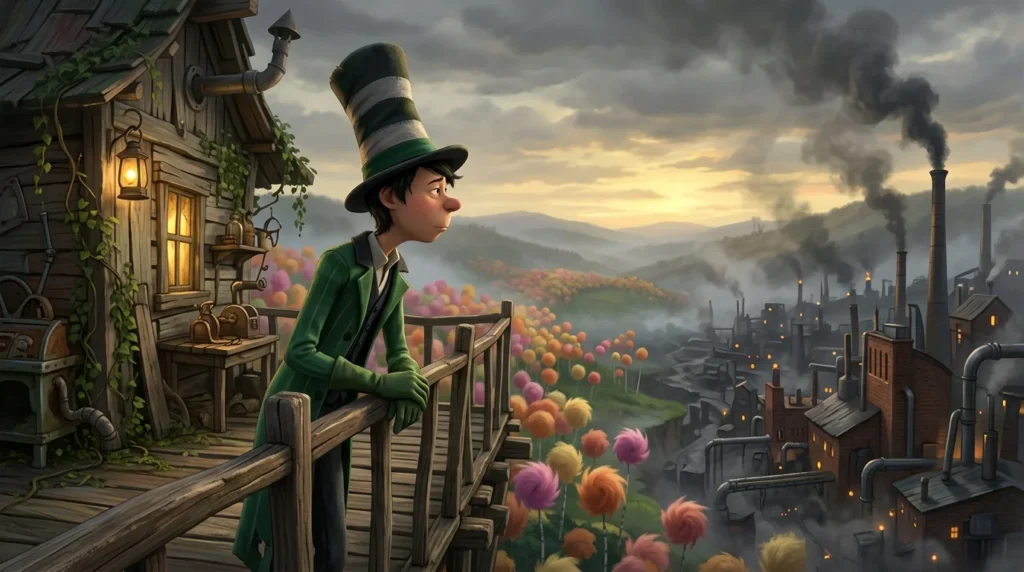
Illumination and Universal released an animated film adaptation in 2012. The movie gives the younger Once-ler a visible face and larger personality. Ed Helms voices the character in the English-language version.
The film presents him as an ambitious young inventor seeking success. His appearance makes his transformation easier to follow visually. Viewers see both his hopeful beginning and increasingly extravagant business phase.
His relationships receive more attention than they receive in the book. The film also expands his personal motivations and family interactions. These additions make the character more emotionally accessible to movie audiences.
The underlying environmental arc remains recognizable. He discovers the Truffula forest, develops Thneeds, and ignores repeated warnings. Industrial expansion eventually destroys the trees supporting his business.
Universal’s promotion of the film lists Ed Helms among the starring cast. The 2012 adaptation also stars Danny DeVito, Zac Efron, and Taylor Swift. American audiences helped turn this version into a lasting internet character.
For more animation and film-related reading, Magazine Camp readers can browse the movie trivia guide. It covers movies, characters, actors, and franchises across different eras. That makes it a useful companion for pop-culture fans.
Why Did the Once-ler Become a Tumblr Phenomenon?
The movie appeared during a period when Tumblr fandom communities were highly active. Fans quickly focused on the younger animated version of the character. Art, roleplay accounts, alternate universes, and character variations followed.
One unusual feature was the enormous focus on a single character. Fans created alternative versions with different personalities, settings, clothing, and storylines. Those variations often interacted through Tumblr ask blogs.
The community also became associated with “Oncest.” That fandom term described pairing different versions of the character together. The practice became one of the strangest remembered features of early-2010s Tumblr culture.
Fanlore archives describe the community as a distinct fandom built around these reinterpretations. Several surviving fan archives also document early ask blogs and alternate versions. Those records show how quickly fans moved beyond the original movie.
The phenomenon later became connected with the idea of the “Tumblr Sexyman.” That label describes male fictional characters who attract unusually intense Tumblr fandoms. The 2012 Once-ler is frequently described as an early model for that internet archetype.
Internet culture often changes a character’s meaning far beyond the original work. Magazine Camp’s hiding meme explainer shows a similar pattern with online imagery. Communities repeatedly remix familiar media into new jokes, identities, and shared references.
Book Once-ler vs. 2012 Movie Once-ler
| Feature | Original book | 2012 animated movie |
|---|---|---|
| Appearance | Largely mysterious and concealed | Fully visible human character |
| Personality | Defined mainly through his actions | More expressive and socially developed |
| Backstory | Limited | Expanded |
| Business arc | Central to the story | Central to the story |
| Environmental message | Strong | Strong |
| Fandom influence | Limited | Extremely significant online |
| Voice actor | Not applicable | Ed Helms |
The biggest difference involves characterization rather than the environmental message. Dr. Seuss keeps the businessman anonymous enough to feel universal. The movie turns him into a recognizable individual with humor and personal relationships.
That creative change had an unexpected effect outside theaters. A visible, expressive character gave online artists more material for reinterpretation. Tumblr users then developed an internet identity largely separate from the original cautionary role.
Why the Character Still Matters
The Once-ler remains relevant because his basic conflict is easy to understand. Production creates wealth, but production also consumes limited resources. Ignoring that balance creates consequences for both nature and business.
His company fails for the same reason the forest fails. Cutting every Truffula Tree destroys the resource supporting future Thneed production. Environmental damage and economic collapse become parts of the same mistake.
That point gives the story unusual staying power for a children’s book. The lesson connects consumer demand, business incentives, pollution, and resource depletion. Readers can understand those relationships without technical environmental language.
The character also matters because internet culture gave him a second life. Many younger viewers first encountered him through memes, fan art, or Tumblr history. They may later discover that his original role carries a serious ecological warning.
Readers interested in more film and pop-culture coverage can explore Magazine Camp’s Entertainment section. The section includes movie, celebrity, television, and cultural coverage. It provides a natural next stop after this character explainer.
Seven Facts to Remember
- Dr. Seuss officially spells the character’s name Once-ler.
- He first appeared in The Lorax, published in 1971.
- He creates a multipurpose product called a Thneed.
- Thneeds require tufts taken from Truffula Trees.
- His expanding business eventually destroys the forest.
- Ed Helms voices the character in the 2012 animated movie.
- That movie version inspired a major Tumblr fandom and many alternate interpretations.
These facts explain why the character has two different cultural identities. One belongs to Dr. Seuss’s environmental cautionary story. The other belongs to internet fandom history.
Both identities still shape how people discuss him. Readers searching the name may want the story, the meme history, or both. Understanding each side prevents the online phenomenon from replacing the original message.
Frequently Asked Questions
Why is the Onceler famous online?
The 2012 movie version attracted an unusually active fandom on Tumblr. Fans created artwork, roleplay blogs, alternate universes, and many redesigned versions. That community later became part of wider discussions about Tumblr fandom history.
Is Once-ler a villain?
He functions as the main cause of the environmental disaster in The Lorax. Still, the story gives him regret and a chance to help repair the damage. That makes him a cautionary figure rather than a purely evil character.
Why does the Once-ler cut down the Truffula Trees?
He needs their tufts to manufacture Thneeds for customers. Growing demand encourages him to increase production. He continues despite warnings until no usable trees remain.
What is a Thneed?
A Thneed is the fictional product created from Truffula Tree material. The story presents it as something buyers suddenly decide they need. Its popularity drives the Once-ler’s expanding business.
Who voices the Once-ler in the 2012 movie?
American actor and comedian Ed Helms voices him in the English-language film. Universal’s official movie listing includes Helms among the principal cast. His performance helped define the animated character’s energetic personality.
Does the Once-ler have a real name?
Dr. Seuss does not provide another conventional personal name for the character. “Once-ler” functions as his identifying name throughout the story. The unusual wording fits Seuss’s broader use of invented language.
What the Once-ler’s Story Leaves Behind
The Once-ler endures because his story works on several levels. Children can follow a simple conflict about trees and pollution. Older readers can recognize questions about consumption, growth, and accountability.
The 2012 adaptation added another chapter that Dr. Seuss could never have predicted. Tumblr transformed one environmental cautionary figure into a major internet fandom icon. That history now follows the character whenever his name trends online.
Start with the original book if you want to understand the character completely. Then watch the 2012 film to see why online fans reacted differently. Together, they explain both the ecological warning and the internet phenomenon.
—–