If you use a hair dryer regularly, you may wonder whether you are slowly damaging your hair. Is blow drying hair bad? It can be, especially when you use high heat or hold the dryer too close. Lower temperatures, sensible distance, and shorter drying times can reduce that risk.
Quick answer: Blow drying can damage the hair shaft when excessive heat is used repeatedly. Higher temperatures can roughen the cuticle and increase breakage. Using low or medium heat, keeping the dryer moving, maintaining distance, and partially air-drying first can make the process gentler.
| Blow-Drying Factor | What to Know |
|---|---|
| High heat | Raises the risk of cuticle damage and dryness |
| Low or medium heat | Generally gentler for routine drying |
| Dryer distance | Keeping space between the nozzle and hair reduces concentrated heat |
| Constant movement | Prevents one section from overheating |
| Wet hair | More delicate and easier to damage through rough handling |
| Heat protectant | Can help reduce heat-related stress during styling |
| Frequency | Repeated heat exposure can increase cumulative damage |
Is Blow Drying Hair Bad for Your Hair?
A hair dryer itself is not automatically harmful. The larger issue is how much heat reaches each strand. Research shows visible surface damage increases as drying temperature rises.
Hair has an outer protective layer called the cuticle. Excessive heat can make this surface rougher and more prone to cracks. Damaged strands may then feel dry, frizzy, brittle, or harder to manage.
The American Academy of Dermatology recommends limiting excessive heat during hair care. It also advises using low or medium heat settings when possible. These changes can help reduce unnecessary stress on the hair shaft.
Why Too Much Heat Causes Damage
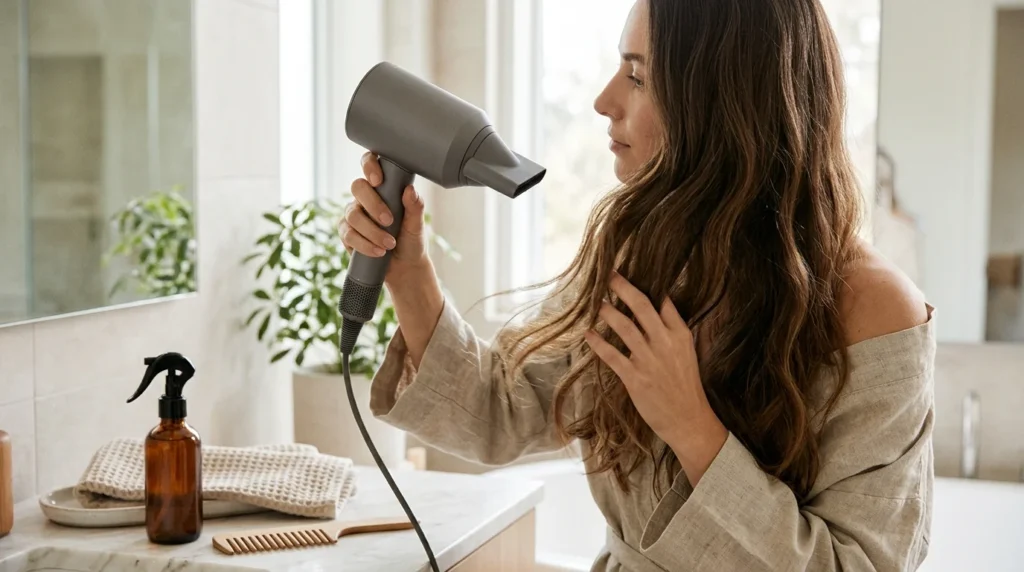
Hair fibers contain keratin proteins and structural lipids. Heat can alter the hair’s outer surface when exposure becomes intense or repeated. The damage is mainly cosmetic, but it can also weaken strands.
A laboratory study compared several drying temperatures and distances. Surface damage became more noticeable as the temperature increased. The hottest test condition produced the most severe cuticle changes.
Extremely hot equipment can cause more serious hair-shaft defects. An older medical case report linked an overheating dryer with “bubble hair.” This condition involves heat-created cavities inside affected strands.
Is Air-Drying Always Better?
Air-drying sounds like the safest option because it removes direct heat. The answer is more complicated than that simple rule suggests. Hair also changes physically when it stays wet for a long period.
A controlled study found an interesting result. Drying from about six inches away with continuous movement caused less measured damage than natural drying under that study’s conditions. The researchers still found greater surface damage as temperatures increased.
That does not mean everyone should replace air-drying with a hair dryer. It shows that temperature, distance, and technique matter as much as the drying method. Gentle partial air-drying followed by controlled heat can be a practical middle ground.
7 Ways to Reduce Hair Damage While Blow-Drying
1. Remove Excess Water Gently
Avoid aggressively rubbing wet hair with a bath towel. Wet strands stretch and break more easily with rough handling. Instead, gently blot or wrap your hair with a soft towel.
A microfiber towel can remove more surface moisture before heat styling. This reduces the amount of time needed under the dryer. The American Academy of Dermatology also recommends handling your hair gently.
2. Let Your Hair Partially Air-Dry
You don’t need to start drying immediately after leaving the shower. Allowing some moisture to evaporate naturally can shorten heat exposure. Your exact timing will depend on hair thickness and texture.
The goal is not to leave hair damp for many hours. Instead, remove excess water and let it become less saturated. You can then finish with controlled airflow.
3. Choose Low or Medium Heat
The highest temperature setting is rarely necessary for everyday drying. Lower heat usually takes longer but exposes the cuticle to less intense temperatures. That trade-off can be worthwhile for frequently styled hair.
Dermatologists advise using low or medium settings to protect hair from excessive heat. If your scalp or strands feel painfully hot, reduce the temperature immediately.
4. Keep the Dryer Moving
Do not aim hot air at the same section for an extended period. Continuous movement distributes heat over a wider area. It also reduces the chance of creating concentrated hot spots.
Move the dryer gradually from the roots toward the ends. Use your free hand to monitor how warm the hair feels. Stop or lower the temperature if any section becomes uncomfortably hot.
5. Maintain Some Distance
Holding a dryer directly against the hair can expose strands to concentrated heat. More distance lets the air cool slightly before it reaches the surface. This can reduce thermal stress.
One frequently cited study tested a dryer from approximately six inches away with continuous movement. That method produced less damage than hotter, closer drying conditions.
6. Use a Heat-Protectant Product
Heat-protectant sprays and creams are designed to form a protective coating around strands. They cannot make extreme temperatures harmless. They can still provide an added layer of protection during normal styling.
Apply the product according to its label instructions. Make sure it suits your hair texture and styling routine. People with fine hair may prefer lightweight formulas that avoid heavy buildup.
7. Reduce Other Sources of Damage
Heat is only one factor affecting hair condition. Bleaching, chemical treatments, rough brushing, tight hairstyles, and frequent hot-tool use can add stress. Combining several damaging practices can make breakage more noticeable.
If your strands already feel fragile, simplify your routine for a while. Magazine Camp’s guide to thicker and healthier hair also covers scalp care and ways to limit heat-related damage. Readers can find additional wellness information in the site’s Health section.
Does Blow-Drying Cause Hair Loss?
Normal dryer use usually affects the hair shaft rather than the follicle producing it. Damaged strands can break, making the hair appear thinner. That breakage differs from true hair loss that begins at the root.
Problems may worsen when blow-drying involves aggressive brushing. Repeated tension can stress already fragile strands. Dermatologists also warn that ongoing traction from certain styling practices can contribute to hair loss.
See a board-certified dermatologist if you notice persistent shedding or obvious thinning. Sudden hair loss can have causes unrelated to styling habits. Medical evaluation can help identify the underlying reason.
What About Curly, Coily, or Textured Hair?
Different textures don’t respond the same way to drying and brushing. Curly and tightly textured hair can be naturally more vulnerable to dryness and breakage. Heat settings and handling should reflect those differences.
Use a diffuser when you want to preserve curl definition. A lower temperature and moderate airflow can help reduce unwanted frizz. Avoid stretching sections aggressively while they are wet and delicate.
The American Academy of Dermatology recommends adjusting wet-hair handling according to texture. People with tightly curled hair may benefit from detangling while their hair remains damp. Magazine Camp’s Fashion coverage offers more appearance and styling-related reading.
Signs Your Hair May Be Getting Too Much Heat
Your hair can provide clues when your routine is becoming too harsh. Dryness or a rough texture may appear before severe breakage. Split ends and increased tangling can also signal cumulative damage.
Watch for these common warning signs.
- More split ends than usual
- Increased snapping or breakage
- Rough or straw-like texture
- Loss of natural shine
- Persistent frizz
- Difficulty retaining moisture
- Sections that feel unusually brittle
These signs don’t prove a dryer is the only cause. Chemical treatments and mechanical styling can create similar changes. Consider your entire routine before deciding what needs adjustment.
How Often Can You Safely Blow-Dry Your Hair?
No universal number works for everyone. Hair condition, temperature, texture, chemical treatments, and styling technique all affect tolerance. Someone with bleached hair may need more caution than someone with untreated hair.
The American Academy of Dermatology recommends reducing heat-tool frequency when hair shows damage. If daily drying is necessary, cooler settings and shorter sessions become especially important.
You can also alternate between drying methods. Partially air-dry on less rushed days and use the dryer when convenience matters. Consistency with gentle habits often matters more than following a rigid schedule.
Frequently Asked Questions
Is blow drying hair bad every day?
Daily heat exposure can increase cumulative damage, especially at high temperatures. Lower heat and shorter sessions can reduce the risk. Partially air-drying before using the dryer may also shorten exposure.
Is cold-air blow-drying damaging?
Cool airflow avoids much of the thermal stress associated with hot settings. Mechanical pulling can still damage fragile strands during styling. Gentle handling remains important even without high heat.
Should I blow-dry soaking-wet hair?
It is usually better to remove excess moisture first. Soaking-wet hair takes longer to dry and requires more exposure. Gently blotting first can shorten the process considerably.
Can a hair dryer permanently damage hair?
Damage to an existing hair shaft cannot biologically heal itself. Conditioners can improve softness and appearance, but severely split sections eventually need trimming. New hair growth is not automatically damaged because older strands were overheated.
What is the healthiest way to dry hair?
A gentle combination often works well. Blot excess water, let it air-dry partially, then use low or medium heat from a reasonable distance. Keep the dryer moving instead of concentrating heat on one spot.
The Bottom Line
Blow-drying does not have to ruin healthy hair. High temperatures, close distance, and repeated overheating create the greatest concerns. Gentle technique can make a meaningful difference.
Use less heat than you think you need. Remove excess moisture before starting and keep the dryer moving throughout the process. If your strands remain brittle despite those changes, consider professional guidance.
For more practical hair and wellness information, explore Magazine Camp’s Health coverage. A simpler routine may protect your hair better than adding more products. Watch how your strands respond and adjust accordingly.