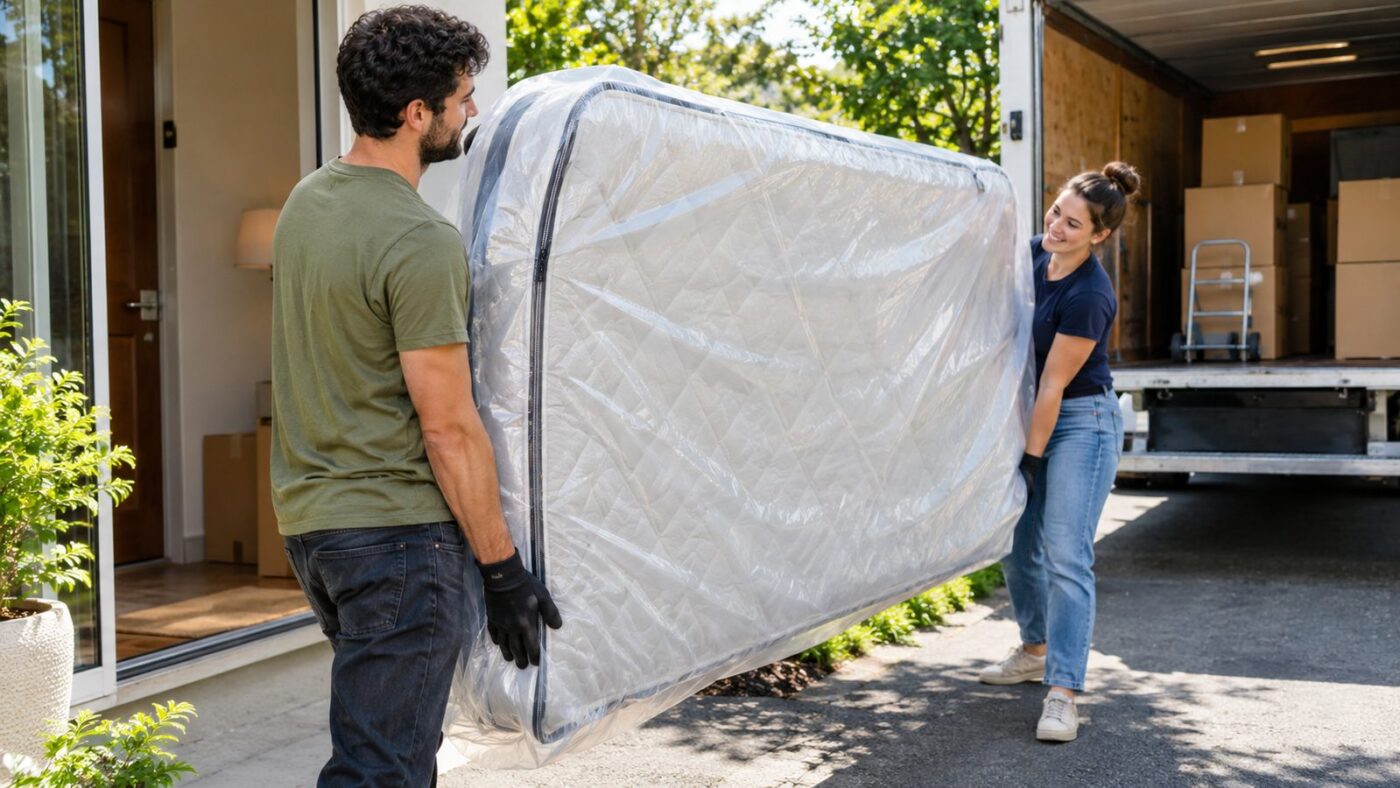
Moving a mattress without protection can expose it to dirt, moisture, scuffs, and rough surfaces. A mattress cover for moving creates a barrier while your bed travels through hallways, trucks, and storage areas. The right choice depends on your mattress dimensions, moving distance, handling conditions, and storage plans. A thin disposable bag may work for a short and carefully managed move. Longer trips or repeated handling usually call for thicker material and stronger closures. Reusable covers with handles can also make large mattresses easier to control. Quick answer: Choose a moving cover that matches your mattress length, width, and depth. Use thicker material for rough handling, long trips, or storage. A zipper or adhesive closure offers easier sealing, while reinforced handles can make carrying safer and more manageable.
Mattress Moving Cover at a Glance
| Feature | What to Check | Why It Matters |
|---|---|---|
| Size | Length, width, and mattress depth | Prevents an overly tight or loose fit |
| Material | Plastic film, heavy plastic, or reusable fabric | Changes durability and tear resistance |
| Thickness | Light, medium, or heavy-duty construction | Helps match protection to moving conditions |
| Closure | Open end, adhesive seal, or zipper | Affects sealing and reuse |
| Handles | Reinforced carrying handles | Can improve control while carrying |
| Moisture resistance | Water-resistant or waterproof construction | Helps during rain or damp loading conditions |
| Reusability | Disposable or reusable design | Matters for storage and future moves |
Why Your Mattress Needs Protection During a Move
A mattress spends years inside a relatively controlled bedroom environment. Moving day suddenly exposes it to floors, door frames, truck interiors, sidewalks, and unfamiliar storage spaces. Even careful movers can accidentally brush the fabric against dusty or dirty surfaces. Moisture creates another concern during loading and unloading. Rain, wet pavement, or a damp truck floor can transfer moisture onto exposed upholstery. A protective barrier reduces direct contact while the mattress is outside its normal environment. Lingering dampness is also a household concern, as this guide on how water damage can affect a home’s structure explains. Protection also matters because mattresses can be difficult to clean thoroughly. Deep fabrics, seams, and padding can trap grime after a dirty move. Covering the bed before carrying it is usually easier than dealing with stains later.
How to Choose a Mattress Cover for Moving
The best mattress cover for moving is not automatically the thickest or most expensive option. Your choice should reflect how far the mattress travels and how often people will handle it. Start with fit, then compare material, closure, and carrying features.
1. Measure the Mattress Instead of Trusting the Size Label
Start by measuring the mattress length, width, and total depth. Pillow-top and extra-deep mattresses can be thicker than standard models with the same size label. A cover labeled “Queen” may therefore fit one queen mattress better than another. Leave enough room to slide the cover over corners without excessive pulling. A cover that is too tight can tear while you load the mattress. An oversized bag can also bunch around the edges and become harder to carry. Measure the box spring separately if you plan to cover it. Foundations can have different depths from the mattress above them. Buying separate covers also keeps both pieces protected throughout the move.
2. Match Material Strength to the Move
Light plastic can work for a straightforward move with limited handling. Thicker film is usually more suitable when the mattress will cross stairs, narrow doorways, or rough loading areas. Tougher material gives you more protection against snags and accidental punctures. Reusable fabric or tarp-style covers suit people who expect repeated moves or extended storage. These designs often include stronger seams and more substantial closures. They cost more initially but may provide better value across several uses. Avoid choosing material based on thickness alone. Seams, closure quality, and construction also affect durability. A well-made cover should remain intact around corners and edges during normal handling.
3. Decide Whether You Need a Zipper or Tape Closure
Basic plastic bags often have an open end that you seal with packing tape. This design is affordable and works well when you only expect to open the bag once. Seal every opening carefully so loose plastic does not catch during carrying. Zippered designs are easier to reopen after arriving at your destination. They can also work better when you plan to reuse the cover for storage. Check the zipper construction because weak seams can become stress points during loading. Adhesive closures provide another convenient option. They remove the need for long strips of tape around the opening. A secure closure also helps keep dust away from the mattress surface.
4. Consider Handles for Heavy or Awkward Mattresses
Mattresses are difficult to carry because their size makes gripping them awkward. A reusable cover with reinforced handles can provide more predictable hand positions. This feature is especially useful for queen, king, latex, and heavier hybrid beds. Handles should connect securely to the body of the cover. Weak stitching can tear when several people lift a heavy mattress. Never assume a handle can support more weight than its manufacturer recommends. Plan the carrying route before lifting anything. Clear furniture, boxes, rugs, and other obstacles from the path first. That preparation can reduce sudden movements that damage either the bed or the cover.
5. Think About Weather and Storage Conditions
A short indoor move creates different demands from a cross-country relocation. Rain exposure, outdoor loading, garages, and storage units increase the importance of moisture resistance. Choose protection suited to the most demanding part of your route. The mattress should be completely dry before you seal it inside plastic. Trapping existing moisture can create unwanted conditions during storage. Clean and dry the bed before covering it whenever possible. Long storage periods may require different protection from short transportation. Follow any care guidance provided by your mattress manufacturer. Storage conditions should remain dry, clean, and suitable for upholstered furniture.
Disposable vs. Reusable Mattress Covers
| Type | Best For | Advantages | Limitations |
|---|---|---|---|
| Disposable plastic bag | Short local moves | Affordable, light, easy to store | Usually fewer carrying features |
| Heavy plastic bag | Longer or rougher moves | Better resistance to tears and scuffs | May still require tape |
| Zippered reusable cover | Repeated moves and storage | Easy access and reusable construction | Higher purchase cost |
| Cover with handles | Large or heavy mattresses | Easier grip and improved control | Quality varies between designs |
Disposable covers make sense when cost and simplicity matter most. Inexpensive plastic bags and pricier reusable designs with zippers and handles are both widely available. Compare features rather than assuming every product offers equal protection. Reusable models become more attractive when the cover will serve several purposes. You might use one for moving, temporary renovation protection, and later storage. That versatility can justify paying more for stronger material. Neither type is automatically right for every household. A careful local move may not require a heavy reusable bag. A complicated move with stairs, storage, and several loading stages usually benefits from stronger protection.
How to Put a Mattress Into a Moving Cover
Prepare the mattress before bringing out the cover. Remove sheets, pads, toppers, and other bedding first. Vacuum loose dust and confirm that every surface is dry.
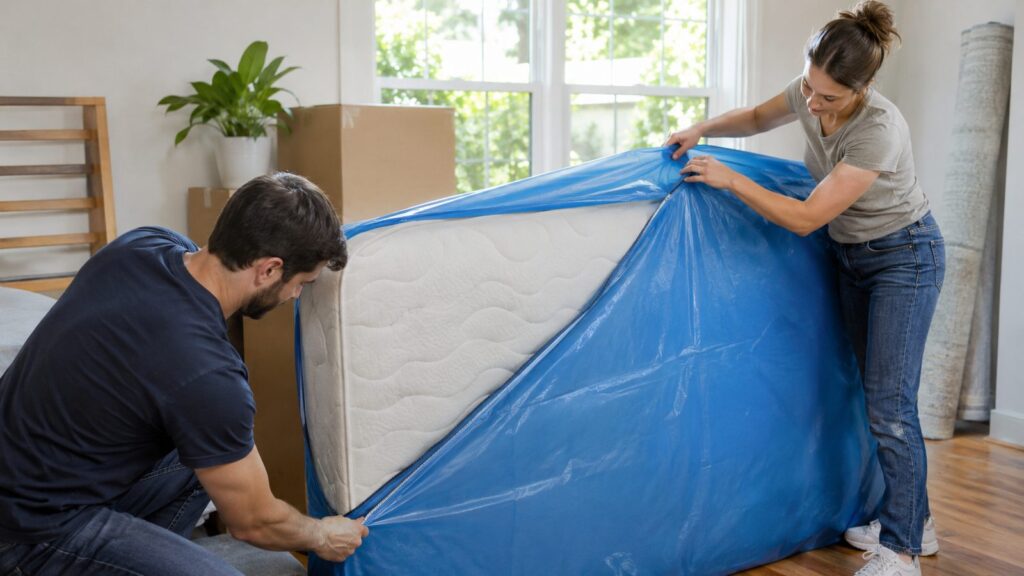
1. Place the mattress on a clean floor or protected working surface. 2. Open the cover fully and identify its sealed and open ends. 3. Slide one end of the mattress carefully into the bag. 4. Work the material over each corner without pulling aggressively. 5. Continue until the mattress sits completely inside the cover. 6. Seal the opening with its zipper, adhesive strip, or packing tape. 7. Inspect the corners and repair small openings before carrying it. 8. Label the covered mattress if several beds are moving together.
Two people can make this process easier with larger mattresses. One person can guide the cover while the other keeps the mattress stable. Working slowly also reduces the chance of tearing thin plastic around sharp corners.
Common Mattress-Cover Mistakes to Avoid
Buying only by mattress name is a common mistake. Mattress depth varies considerably, especially with pillow-top designs and thick comfort layers. Measure the actual bed before ordering protection. Another mistake is covering a damp mattress. Moisture can become trapped once you seal the material around the bed. Dry the mattress fully before packing it for transportation or storage. Do not rely on the cover alone to secure the mattress inside a vehicle. The cover protects the surface but does not stop the bed from shifting. Use appropriate moving straps and position the mattress according to manufacturer guidance. Dragging a covered mattress across rough pavement can also damage the protective material. Thick plastic can still puncture against sharp concrete or metal. Lift and carry whenever practical instead of treating the cover like a sled.
Protect the Rest of Your Bedroom While Moving
Mattress protection works best as part of a wider bedroom packing plan. Remove nearby furniture before maneuvering a large bed through the room. MagazineCamp’s guide to bedroom wardrobe options can also help when reorganizing storage after a move. Moving can reveal maintenance problems that were hidden behind furniture. Check walls, windows, and flooring while the room is empty. The site’s guide to common home-remodel mistakes offers useful planning ideas for larger changes. Water exposure deserves attention before putting furniture into a new room. Damp walls or flooring should be addressed before placing a mattress nearby.
When a Heavy-Duty Cover Is Worth Buying
Choose heavier protection when your move involves multiple handling stages. Apartment stairs, storage facilities, long-distance trucks, and repeated loading all increase abrasion risk. Stronger material can provide useful insurance against ordinary moving-day contact. A reusable design can also make sense if you move frequently. College students, military households, renters, and people renovating homes may use one several times. Handles and zippers become more valuable when repeated access is expected. A basic plastic bag remains practical for many short moves. You do not need premium features when the route is simple and controlled. Spend based on the actual risks your mattress will face.
FAQ
Do I really need a mattress cover for moving?
Yes, covering the mattress is a sensible precaution during transportation. It reduces direct exposure to dust, dirt, moisture, and dirty surfaces. The cover is especially useful inside rental trucks or shared moving equipment.
What size mattress cover should I buy?
Measure the mattress length, width, and depth before choosing a cover. Pay particular attention to depth if you own a pillow-top or thick hybrid model. Select a product whose listed dimensions comfortably fit those measurements.
Can I use regular plastic wrap instead?
Stretch wrap can provide some surface protection, but dedicated mattress bags are easier to fully enclose. Bags also reduce the number of seams created during wrapping. A purpose-made cover is usually the simpler option for most household moves.
Is a waterproof cover necessary?
Water resistance becomes more useful when outdoor loading or wet weather is possible. It can also help when the mattress passes through garages or other damp areas. Keep in mind that the mattress should already be dry before sealing it.
Can I leave the mattress inside the moving cover for storage?
That depends on the cover material and the mattress manufacturer’s storage instructions. Long-term storage needs clean, dry conditions and suitable ventilation. Check both product instructions before sealing a mattress for an extended period.
Should I buy a reusable cover with handles?
Handles can help when you expect several people to carry a large mattress. Reusable covers also make sense for future moves or temporary storage. For one simple local move, a disposable cover may provide enough protection.
Final Buying Checklist
A good moving cover should fit without stretching tightly around the corners. It should also match the distance, handling level, weather exposure, and storage needs of your move. Strong closures and useful handles become more valuable as the move becomes more demanding. Measure first, choose the material second, and inspect the closure before buying. Then clean and dry the mattress before placing it inside. These simple steps can keep an expensive bed cleaner and better protected from one home to the next. For more practical household guidance, browse MagazineCamp’s Home Improvement section. Planning protection before moving day reduces last-minute problems. It also gives you time to choose a cover that fits your mattress properly.