
Vehicular manslaughter generally means causing another person’s death through negligent, reckless, impaired, or otherwise unlawful driving. The offense does not usually require an intent to kill, which separates it from many murder charges. Yet there is no single nationwide definition or penalty because states use different statutes, names, and levels of fault. Anyone dealing with a real case should therefore check the law in the state where the crash occurred.
Direct answer: This driving-related homicide charge applies when a person’s operation of a vehicle causes a death under circumstances that meet a criminal standard of negligence, recklessness, impairment, or unlawful conduct. The required fault and possible punishment depend on state law. A fatal accident by itself does not automatically establish criminal liability.
| Key point | What it means |
|---|---|
| Intent to kill | Usually not required |
| Conduct commonly involved | Negligence, gross negligence, recklessness, DUI, or another unlawful driving act |
| Charge name | May include vehicular homicide, automobile homicide, or another state-specific term |
| Felony or misdemeanor | Can be either, depending on the jurisdiction and circumstances |
| Penalties | May include incarceration, fines, probation, license consequences, and other court orders |
| Governing law | Usually state criminal and traffic law |
| Major aggravating factors | Impairment, extreme recklessness, prior offenses, multiple deaths, or other circumstances defined by state law |
Key Takeaways
- A fatal crash does not automatically mean the driver committed a crime.
- Prosecutors generally must connect the driver’s conduct to the death and prove the required level of fault.
- Ordinary negligence can be enough in some jurisdictions, while other offenses require gross negligence, recklessness, or impairment.
- The same conduct may have different charge names and penalties from one state to another.
- DUI-related deaths often fall under separate or more serious statutes.
- State statutes should be checked before relying on a general explanation of possible punishment.
What This Charge Means Under U.S. Law
Cornell Law School’s Legal Information Institute describes the offense as a death resulting from unlawful or negligent operation of a motor vehicle. It also notes that jurisdictions differ in the way they define vehicle-related homicide offenses. Terms such as “vehicular homicide” and “automobile homicide” may describe similar conduct, but the legal elements still depend on the applicable statute.
That distinction matters because traffic fatalities occur under widely different circumstances. A driver may make an ordinary mistake, drive negligently, act with gross negligence, drive recklessly, or operate a vehicle while impaired. Criminal liability depends on which level of conduct the state requires and whether prosecutors can prove that conduct caused the death.
A useful starting point is separating an accident from criminally punishable driving. Not every mistake behind the wheel satisfies a criminal statute, even when the consequences are tragic. Prosecutors normally need evidence showing both causation and the legally required degree of blameworthiness.
What Prosecutors Must Prove in a Vehicular Manslaughter Case
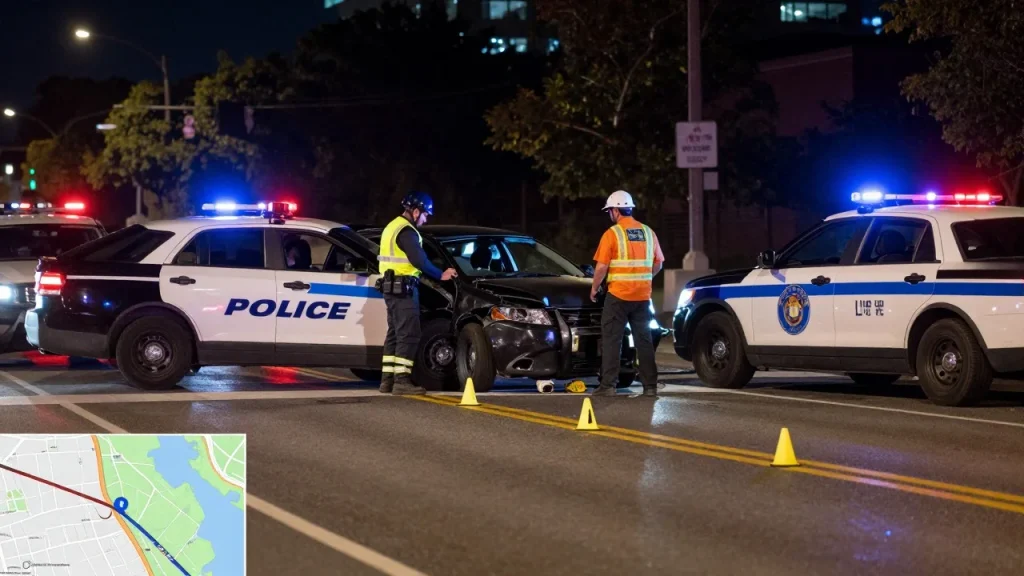
The precise elements change by jurisdiction, but several issues commonly appear in these prosecutions. The state must establish that the accused was operating the vehicle and that another person died. It must also connect the death to conduct that meets the jurisdiction’s criminal standard, such as negligence, recklessness, intoxication, or a specified traffic offense.
Causation can be especially important when several events contributed to a collision. Prosecutors generally need to show more than the fact that the defendant happened to be driving when someone died. Evidence may include crash reconstruction, witness accounts, vehicle data, toxicology results, video, phone records, road conditions, and other information relevant to the collision.
The required mental state can also change the potential charge. Simple negligence represents a lower level of fault than gross negligence or recklessness. States draw these lines differently, so a fact pattern that supports one offense in Nevada may fall under another statutory category in California or New York.
How Negligence, Reckless Driving, and DUI Affect the Charge
Negligence generally concerns a failure to use legally required care, while gross negligence involves more serious disregard for safety. Recklessness usually reflects a higher degree of conscious risk-taking than ordinary carelessness. Those distinctions often influence whether prosecutors can file a charge and how seriously the law classifies the conduct.
Alcohol or drug impairment can change the case substantially. Some states have specific statutes addressing fatal crashes involving DUI, and aggravating circumstances may increase the offense level or sentencing exposure. California, for example, separately defines gross vehicle-related manslaughter while intoxicated and a form without gross negligence.
National safety data also shows why impairment remains central to fatal-crash law and policy. NHTSA’s national data on drunk driving records 11,904 deaths in alcohol-impaired-driving crashes during 2024, accounting for 30 percent of U.S. traffic fatalities. The agency also reported 11,288 speeding-related deaths in 2024, showing how several forms of risky driving contribute to serious roadway harm.
State Laws Can Produce Very Different Results
Looking at current statutes illustrates why nationwide penalty claims can be misleading. Nevada expressly classifies its simple-negligence version as a misdemeanor, while other jurisdictions use felony classifications for specified fatal driving offenses. New York and California also divide conduct into different categories based on factors such as impairment and gross negligence.
| State example | Statutory approach | Important distinction |
|---|---|---|
| Nevada | Vehicular manslaughter based on simple negligence is a misdemeanor | The statute focuses on a death proximately caused through simple negligence |
| California | Separate statutes cover vehicle-related killings, including offenses involving intoxication | Gross negligence and intoxication can change the applicable offense |
| New York | Uses first- and second-degree vehicle-related manslaughter statutes | First-degree treatment can apply when specified aggravating circumstances exist |
| Washington | Uses the term vehicular homicide | DUI, reckless driving, or disregard for others’ safety can satisfy different statutory routes |
Washington provides another example of terminology differences. Its vehicular homicide statute applies when a death is proximately caused by driving while impaired, driving recklessly, or driving with disregard for the safety of others. The state calls the offense “vehicular homicide” rather than using the same title found in every other jurisdiction.
These examples should not be treated as a fifty-state penalty chart. Statutes can be amended, sentencing rules may exist elsewhere in a state code, and prior convictions can affect the result. A current state statute and qualified local legal advice are more reliable than applying another state’s rule to a real case.
Is the Offense a Felony or a Misdemeanor?
It can be either, which is one reason broad statements about punishment should be treated cautiously. Nevada currently provides a clear example of a misdemeanor form based on simple negligence. New York, by contrast, classifies second-degree vehicle-related manslaughter under its statute as a Class D felony and first-degree as a Class C felony.
A felony classification usually carries greater potential incarceration and longer-term consequences than a misdemeanor. Sentencing can also depend on prior offenses, intoxication, the number of victims, the degree of negligence, and other statutory factors. Magazine Camp’s jail vs. prison explainer provides additional context on why the offense label alone does not determine where or how a sentence will be served.
The final punishment is therefore not determined by the words “fatal crash” alone. Prosecutors first select charges under applicable law, and a conviction must follow before criminal sentencing occurs. The court then applies the sentencing statutes and rules that govern that particular offense and defendant.
Vehicular Homicide, Involuntary Manslaughter, and Murder Are Not the Same
Legal terminology can be confusing because states do not use a uniform naming system. “Vehicular homicide” may function as another name for a driving-related killing in one jurisdiction, while another state may use the term for a distinct statutory offense. “Involuntary manslaughter” can also apply to unintended killings caused through criminal negligence or unlawful conduct, including some driving cases.
| Offense term | General concept | Intent to kill normally required? |
|---|---|---|
| Vehicle-related manslaughter | Death caused by criminally negligent, reckless, impaired, or unlawful driving under state law | No |
| Vehicular homicide | State-specific driving-related homicide offense | Usually no |
| Involuntary manslaughter | Unintentional unlawful killing without malice under applicable law | No |
| Murder | Unlawful killing involving the level of malice or intent required by the governing murder statute | Depends on the statutory theory |
Federal law helps show the broader distinction between manslaughter and murder, although most ordinary roadway prosecutions arise under state law. Federal law defines manslaughter as an unlawful killing without malice and murder as an unlawful killing with malice aforethought. Federal criminal jurisdiction is limited, so those definitions should not be substituted for the statute governing a typical state traffic case.
What Can Happen After a Fatal Traffic Crash?
A fatal collision can trigger several processes at once. Police may investigate the scene, collect statements, obtain toxicology evidence, inspect vehicles, and review electronic or video evidence. Prosecutors may later decide whether the facts support a traffic citation, misdemeanor, felony, or no criminal charge.
Civil and insurance issues can proceed separately from the criminal investigation. A finding about civil fault does not automatically answer whether the state can prove a criminal offense beyond a reasonable doubt. Magazine Camp’s guide to what to do immediately after a car accident covers practical post-collision steps, although a fatal crash requires especially careful attention to local law.
Anyone who is a suspect or defendant in a serious criminal investigation should seek advice from a licensed attorney in the relevant jurisdiction. Families of people killed in crashes may also have separate questions about victim services, insurance, and civil claims. Those issues depend heavily on state law and the facts of the collision.
What to Remember
The central rule is that U.S. law does not provide one universal charge or penalty for every fatal vehicle crash. The driver’s conduct, level of negligence, impairment, causation, prior history, and state statute can all change the legal outcome. Current statutory language should therefore be checked before drawing conclusions about a particular case.
For more plain-English explanations of criminal and civil legal topics, browse Magazine Camp’s Law section. Readers dealing with an active investigation or court case should speak with a lawyer licensed in the relevant state.
Frequently Asked Questions
Is vehicular manslaughter always a felony?
No. The classification depends on the state statute and the conduct involved. Nevada, for example, currently classifies a simple-negligence form as a misdemeanor, while New York statutes provide felony classifications for specified offenses.
Does a driver have to intend to kill someone?
Usually not for the driving-related offenses discussed here. These laws generally focus on negligent, reckless, impaired, or unlawful operation rather than an intent to cause death. A prosecution involving intentional conduct or malice can raise different and potentially more serious homicide laws.
Can DUI make a fatal-crash charge more serious?
Yes, impairment is specifically addressed by many driving-homicide statutes and can lead to different or more serious charges. California and New York both have statutory provisions that expressly address intoxication in fatal vehicle cases. Prior DUI-related history or additional aggravating facts can also matter where state law says they do.
Can speeding alone lead to a homicide charge?
Speed can be relevant, but there is no nationwide rule saying every speeding-related death produces the same criminal charge. Prosecutors must apply the relevant state statute and prove the required negligence, recklessness, causation, or other statutory elements. NHTSA reports that speeding contributed to 29 percent of U.S. traffic fatalities in 2024, which underscores its safety significance without deciding criminal liability in any individual case.
Are vehicular homicide and manslaughter interchangeable terms?
They can describe closely related concepts, but they should not automatically be treated as legally identical. Cornell notes that automobile homicide and vehicular homicide are alternative terms used in this area, while individual states define their own offenses. The exact statute matters more than the label used in ordinary conversation.